
TRUST SIGNALS
WEB DESIGN
What Makes a Website Feel Trustworthy at First Glance
Visitors decide whether to trust a business within seconds here’s what genuinely shapes that split-second judgment.
Why First Impressions Form Faster Than You'd Think
Website trust signals matter enormously because visitors form genuine credibility judgments remarkably fast often within a few seconds of a page loading, well before they’ve read any actual content or evaluated specific claims. This snap judgment then colors how they interpret everything that follows, making that crucial first impression genuinely difficult to overcome if it starts negatively.
First impression website design considerations extend beyond simple aesthetics. While visual polish certainly contributes to trust, genuine credibility signals also include specific, tangible elements that reassure visitors your business is legitimate, established, and genuinely capable of delivering on whatever it promises.
The Building Blocks of a Trustworthy Website
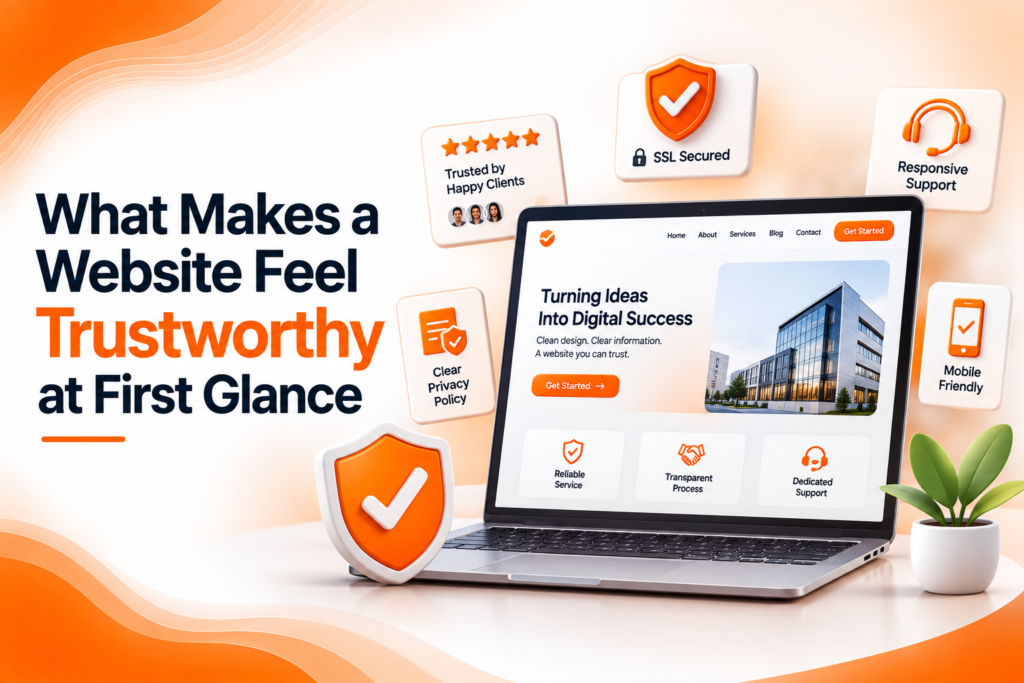
Credibility signals website design incorporates several distinct elements that together build genuine visitor confidence beyond visual appeal alone.
- Professional, current design without outdated visual elements
- Clear, easily findable contact information and physical address
- Genuine customer testimonials and social proof
- Secure browsing indicated by proper SSL implementation
- Consistent, error-free content without typos or broken elements
When these elements work together, a website communicates genuine legitimacy and capability within those critical first few seconds of a visitor’s attention.
Ready for a website that earns trust the moment visitors arrive?
Why Design Quality Signals Legitimacy
Trustworthy website design starts with visual polish that reflects genuine care and investment. An outdated design small, hard-to-read text, cluttered layouts, or visual elements that feel dated compared to current standard subconsciously signals that a business either lacks resources or simply hasn’t prioritized its online presence, both of which erode initial confidence before visitors have even engaged with actual content.
This doesn’t require expensive, elaborate design necessarily, but it does require genuine attention to basic quality standards: clean typography, consistent spacing, appropriate color choices, and a layout that feels intentional rather than assembled without genuine thought or care behind the visual decisions.
💡
Tip
Show your homepage to someone unfamiliar with your business and ask what they'd guess about your company's size, professionalism, and legitimacy within five seconds. Their honest, immediate reaction often reveals trust gaps you've stopped noticing yourself.
Making Contact Information Genuinely Findable
Building trust online significantly depends on visitors being able to easily locate genuine contact information a physical address, phone number, and email, ideally visible without requiring extensive searching through multiple pages. Businesses hiding or making contact information genuinely difficult to find inadvertently signal something worth being suspicious about, even when no genuine issue actually exists.
This transparency matters even for purely online businesses without a traditional physical storefront. A clear “About” page explaining who’s genuinely behind the business, along with accessible contact methods, provides the human context visitors need to feel they’re dealing with a real, accountable entity rather than an anonymous, potentially untrustworthy website.
75%
Of users judge a company's credibility based on website design alone
0.05 Seconds
Time it takes users to form a first impression of a website
88%
Of consumers trust online reviews as much as personal recommendations
The Genuine Power of Social Proof
Website design trust factors consistently identify genuine customer testimonials, reviews, and case studies as among the most powerful credibility signals available. Unlike a business’s own claims about its quality or reliability, testimonials from actual customers carry inherent third-party credibility that self-promotional marketing copy simply can’t replicate on its own.
This social proof works most effectively when it feels genuinely authentic — specific details, real names and photos where possible, and honest, believable language rather than suspiciously perfect, vague praise that reads as potentially fabricated. Specificity and genuine authenticity matter more for trust-building than volume of testimonials alone.
Small Details That Quietly Undermine Trust
Website trust signals can be quietly undermined by small, seemingly minor issues typos, broken links, outdated copyright dates, or inconsistent formatting across different pages. While any single such issue might seem insignificant in isolation, their cumulative presence subconsciously signals carelessness that visitors then extend to broader assumptions about business quality and reliability.
Slow load times also quietly damage trust, since visitors often interpret sluggish performance as a sign of an unprofessional or poorly maintained operation, even when the actual cause is purely technical and unrelated to genuine business quality or reliability in any meaningful way.
Visitors don't consciously audit your website for trust signals they just feel whether something seems legitimate or not, often before they could even articulate why.
Common Website Trust Mistakes to Avoid
Even established businesses fall into familiar traps: hiding contact information behind excessive navigation, using generic stock photography instead of authentic team or product images, or allowing small errors and inconsistencies to accumulate unnoticed across the site.
The fix isn’t a complete redesign it’s addressing the specific, tangible credibility signals that genuinely shape first impressions, often through smaller, focused improvements rather than a comprehensive overhaul.
How IWS Solutions Can Help
Our team designs websites with genuine trust signals built in from the start, from clear contact information to authentic social proof placement, helping visitors feel confident within those critical first few seconds.