
SEO
SEARCH INTENT
Search Intent The Foundation Every SEO Strategy Needs
Ranking for the right keyword means nothing if your content doesn’t match what the searcher was actually looking for.
Why Keywords Alone Aren't Enough
What is search intent? It’s the genuine underlying goal behind a specific search query what the person actually wants to find, accomplish, or learn, beyond just the literal words they typed into the search bar. Search intent SEO recognizes that identical or similar keywords can represent genuinely different intentions depending on subtle phrasing and context.
Understanding search intent matters because ranking for a keyword without matching the searcher’s genuine intent produces poor results regardless of position high bounce rates, low engagement, and ultimately weaker rankings over time, since search engines increasingly evaluate whether content genuinely satisfies what searchers were looking for, not just whether it contains the right words.
The Building Blocks of Search Intent Optimization
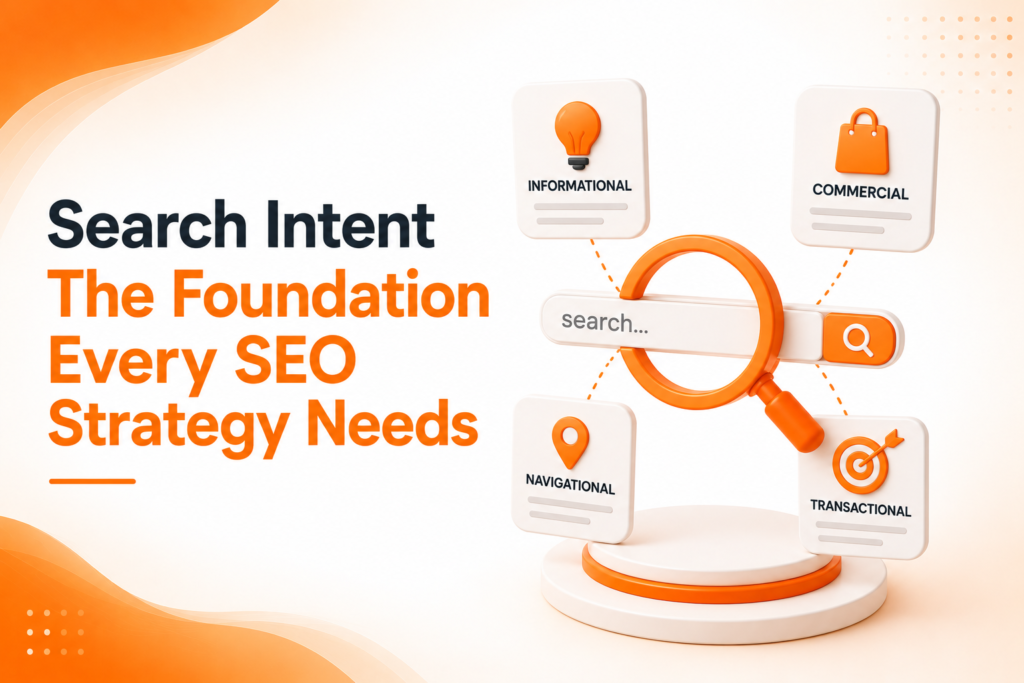
User intent optimization requires understanding the distinct categories searches typically fall into, then genuinely matching content format and depth accordingly.
- Informational intent: seeking knowledge or answers
- Navigational intent: looking for a specific website or brand
- Commercial investigation: comparing options before deciding
- Transactional intent: ready to complete a purchase or action
- Content format matched precisely to each specific intent type
When these categories are understood and applied deliberately, content genuinely satisfies what searchers were looking for, rather than simply targeting the right keyword without addressing genuine intent.
Ready for content that genuinely matches what searchers want?
The Four Core Types of Search Intent
Types of search intent generally fall into four recognized categories. Informational intent reflects someone seeking knowledge “how does SEO work” or “what is a CDN” expecting educational content that genuinely answers their question thoroughly. Navigational intent means someone searching for a specific, already-known website or brand, like typing a company name directly into search.
Commercial investigation intent reflects someone actively comparing options before making a decision “best CRM software for small business” expecting comparison content, reviews, or detailed feature breakdowns. Transactional intent signals genuine readiness to act immediately “buy running shoes online” expecting a direct path to purchase or conversion, not additional educational content delaying that action.
💡
Tip
Search your target keyword yourself and study what's currently ranking. If every top result is a product page, that signals transactional intent; if they're all guides or articles, that signals informational intent instead.
Matching Content Type to Genuine Intent
Matching content to search intent means recognizing that even well-written, valuable content fails if it’s the wrong format for what searchers genuinely wanted. A comprehensive, informative blog post won’t satisfy someone with clear transactional intent ready to buy immediately, just as a bare product page without genuine explanation won’t satisfy someone still in the early research and comparison stage of their decision process.
This matching requires genuine analysis of what’s currently ranking for your target keywords, since Google’s existing search results provide the clearest available signal of what intent that specific keyword genuinely represents, based on what content format the algorithm has already determined best satisfies typical searchers for that particular query.
70%
Of searches show mixed or ambiguous intent signals requiring careful analysis
80%
Of top-ranking pages match the dominant search intent for their target keyword
3x
Higher engagement for content genuinely matched to searcher intent
Reading Subtle Intent Signals Within Keywords
Search intent SEO requires reading subtle language cues within keywords themselves. Words like “how,” “what,” or “why” typically signal informational intent, while “buy,” “price,” or “discount” typically signal transactional intent. “Best,” “vs,” or “review” typically indicate commercial investigation, as searchers are actively weighing multiple options before committing to a specific decision.
These signals aren’t always definitive on their own, though, making it important to verify assumptions against actual current search results rather than relying purely on keyword phrasing patterns. Search engines continuously refine their own intent interpretation, meaning the actual ranking results remain the most reliable, current signal of genuine intent for any specific query.
Building Content Around Mixed or Ambiguous Intent
Some searches genuinely reflect mixed intent, where searchers might be simultaneously researching and considering purchase within the same query. In these cases, content that addresses informational needs while also providing clear pathways toward transactional action — genuinely helpful educational content paired with accessible next steps often performs better than content built around a single, narrowly assumed intent alone.
This hybrid approach acknowledges that user intent isn’t always perfectly binary, and well-structured content can genuinely serve multiple stages of the buyer’s journey simultaneously, provided the structure clearly guides different visitors toward whatever specific information or action they’re genuinely seeking at that particular moment.
Ranking for the right keyword is only half the job the content still has to genuinely deliver what the person searching for it actually wanted.
Common Search Intent Mistakes to Avoid
Even experienced SEO practitioners fall into familiar traps: creating content based purely on keyword volume without analyzing actual intent, mismatching content format against what’s genuinely ranking for a target keyword, or assuming intent based on keyword phrasing alone without verifying against real current search results.
The fix isn’t guessing at intent it’s genuinely studying what’s currently ranking for your target keywords and matching content format and depth accordingly.
How IWS Solutions Can Help
Our team builds SEO content strategies grounded in genuine search intent analysis, ensuring every page we create matches exactly what searchers are actually looking for, not just the keywords they happen to type.