
KEYWORD STRATEGY
SEO
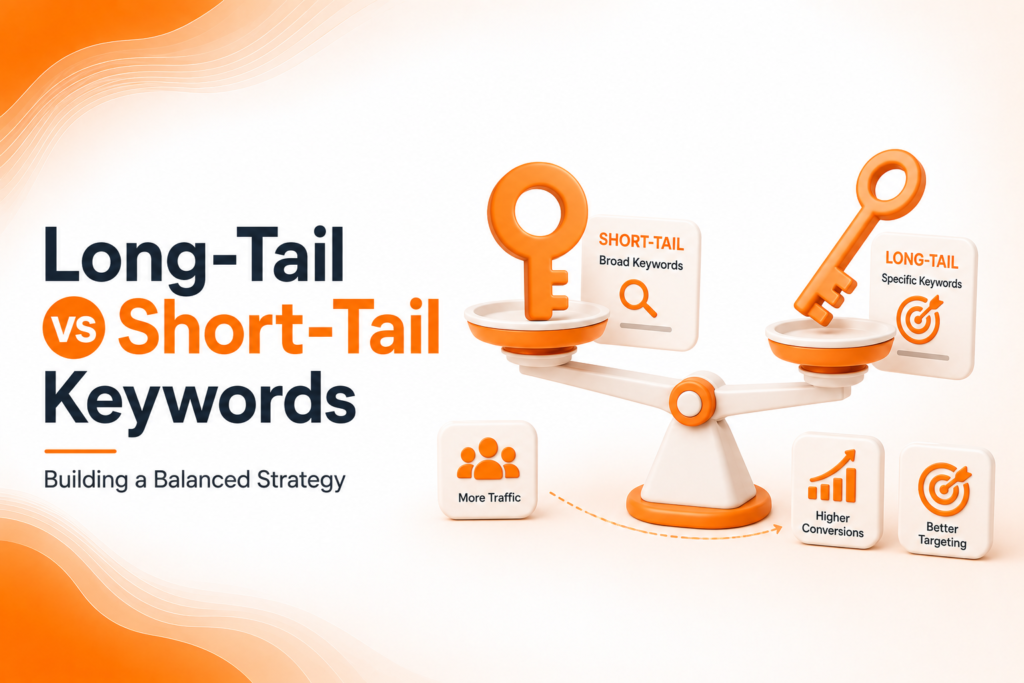
Long-Tail vs Short-Tail Keywords Building a Balanced Strategy
Chasing only high-volume terms or only easy wins both leave value on the table here’s how to build a strategy using both effectively.
Why Neither Extreme Works Well Alone
Long-tail vs short-tail keywords represents a genuine strategic tradeoff, not a decision requiring you to pick one approach exclusively. Short-tail keywords broad, high-volume terms like “web design” carry significant search volume but also intense competition, making them genuinely difficult for newer or smaller sites to rank for in any realistic near-term timeframe.
Long-tail keywords longer, more specific phrases like “affordable web design for small law firms” carry lower individual search volume but considerably less competition, along with clearer, more specific searcher intent that typically converts at meaningfully higher rates than broader, more ambiguous short-tail terms.
The Building Blocks of a Balanced Keyword Strategy
Keyword strategy success depends on understanding when each keyword type genuinely serves your business goals best.
- Short-tail keywords for broader brand visibility and authority
- Long-tail keywords for achievable rankings and qualified traffic
- Content depth matched appropriately to each keyword type
- Realistic timeline expectations differing between the two
- A content plan incorporating both strategically over time
When these elements work together, a keyword strategy captures both the achievable wins long-tail terms offer and the long-term authority-building potential of short-tail terms.
Ready for a keyword strategy that balances quick wins with long-term growth?
Why Long-Tail Keywords Often Win First
Head terms vs long-tail comparisons consistently show that newer or smaller websites achieve genuine ranking success considerably faster targeting long-tail keywords, simply because the reduced competition makes actual first-page rankings realistically achievable within a reasonable timeframe, rather than competing directly against established, high-authority domains for the same broad, contested terms.
This early success matters beyond just rankings themselves. Long-tail keyword traffic, despite lower individual volume, typically converts at higher rates due to more specific, clear searcher intent someone searching a highly specific, detailed phrase generally knows more precisely what they want than someone searching a broad, ambiguous term with countless possible underlying intentions.
💡
Tip
If your site is newer or has limited existing authority, prioritize long-tail keywords for your first several months of content. Early wins build momentum and traffic while your domain authority genuinely develops over time.
Why Short-Tail Keywords Still Matter Long-Term
Despite long-tail’s accessibility advantage, short-tail keywords remain genuinely important for long-term strategy. These broader, high-volume terms typically represent the actual, primary way most potential customers initially discover a business category or need, meaning ranking for them eventually even if it takes longer to achieve captures significantly larger traffic potential than long-tail terms alone could ever provide.
Short-tail keywords also often anchor a site’s broader topical authority. A comprehensive pillar page targeting a competitive short-tail term, supported by numerous related long-tail articles linking back to it, builds the kind of topical depth search engines increasingly reward, even if that primary pillar page itself takes considerably longer to achieve strong rankings.
70%
Of all search queries are long-tail keywords
3-5x
Higher conversion rate for long-tail vs short-tail keyword traffic
92%
Of keywords receive fewer than 10 monthly searches individually
Building a Content Strategy Using Both
Long-tail keywords work particularly well as building blocks supporting a broader short-tail content strategy, often called topic clustering. A comprehensive pillar page targeting a competitive short-tail term gets supported by numerous specific, long-tail articles addressing related subtopics, each linking back to reinforce the pillar page’s authority while independently capturing their own achievable, specific search traffic.
This structure allows a business to simultaneously pursue achievable, near-term traffic through long-tail content, while systematically building the topical depth and internal linking structure that supports eventually competing for those higher-volume, more competitive short-tail terms as the site’s overall authority genuinely develops over time.
Matching Content Depth to Keyword Type
Balanced keyword approach strategy also requires matching content depth appropriately to each keyword type. Short-tail, broad terms typically warrant comprehensive, in-depth pillar content covering a topic thoroughly, since searchers using these broader terms often need substantial, complete information addressing multiple related angles simultaneously.
Long-tail keywords, by contrast, often warrant more focused, specific content directly answering that particular, narrow question or need. Attempting to stretch a highly specific long-tail topic into unnecessarily lengthy content can actually dilute its clarity and specificity, working against the very precision that made that long-tail term valuable and achievable in the first place.
Short-tail keywords are the destination you're building toward long-tail keywords are the achievable steps that actually get you there.
Common Long-Tail vs Short-Tail Mistakes to Avoid
Even experienced SEO practitioners fall into familiar traps: chasing only high-volume short-tail terms without realistic ranking expectations, ignoring short-tail terms entirely in favor of only easier long-tail wins, or failing to structure long-tail content strategically to support broader topical authority over time.
The fix isn’t choosing one keyword type exclusively it’s building a deliberate strategy incorporating both, matched to your site’s current authority and realistic timeline expectations.
How IWS Solutions Can Help
Our team builds keyword strategies balancing achievable long-tail wins with long-term short-tail authority building, ensuring your content plan delivers both near-term traffic and sustainable, compounding growth.