
CONTENT QUALITY
SEO
What Is E-E-A-T and Why It Matters for SEO
Google’s framework for evaluating content quality and why building genuine expertise and trust matters more than chasing keywords alone.
Why Google Built a Framework Around Trust
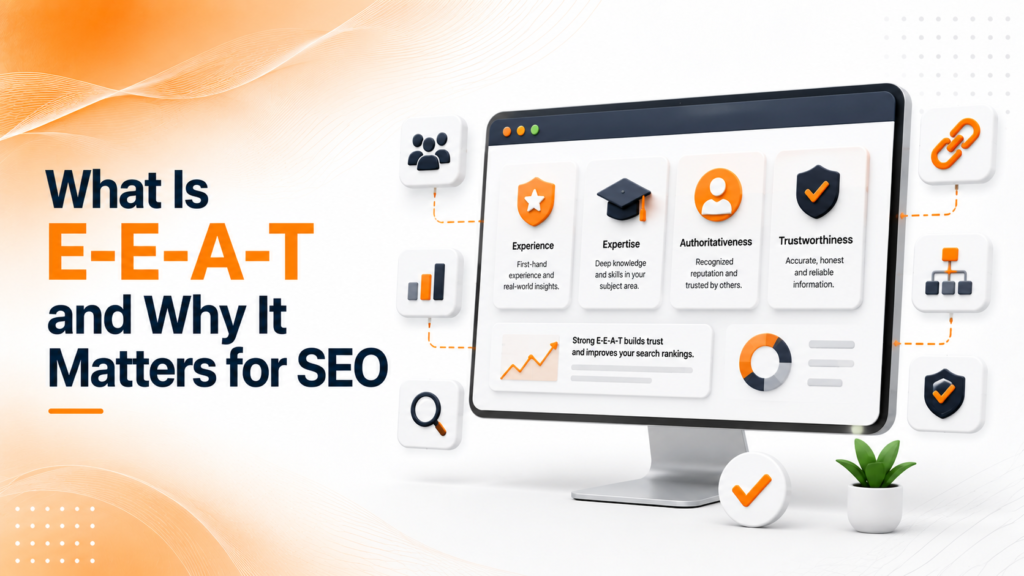
What is E-E-A-T? It stands for Experience, Expertise, Authoritativeness, and Trustworthiness a set of quality signals Google’s search quality raters use to evaluate whether content genuinely deserves to rank, particularly for topics where inaccurate information could cause real harm.
E-E-A-T SEO isn’t a direct, isolated ranking factor you can technically implement like a meta tag. Instead, it represents the underlying quality principles Google’s actual ranking systems are increasingly designed to recognize and reward, making it a framework for thinking about content quality broadly rather than a specific checklist item.
The Building Blocks of Strong E-E-A-T Signals
Google E-E-A-T guidelines break down into four related but distinct components that together build genuine content credibility.
- Experience: genuine, first-hand involvement with the topic
- Expertise: demonstrated knowledge and skill in the subject
- Authoritativeness: recognition from others as a credible source
- Trustworthiness: accuracy, transparency, and honest content
- Author credentials clearly displayed where relevant
When these elements are genuinely present, content naturally aligns with what Google’s quality systems are designed to reward.
Ready for content built on genuine expertise and trust?
Experience: The Newest Addition to the Framework
The first “E” Experience was added specifically to recognize content created by someone with genuine, first-hand involvement with a topic, distinct from purely theoretical expertise. A product review written by someone who actually used the product carries different, often more valuable signals than a generic summary compiled from other sources without direct experience.
This addition reflects Google’s growing emphasis on distinguishing authentic, experience-based content from generic or AI-generated material lacking genuine first-hand knowledge. Content demonstrating specific, personal experience details only someone who actually did the thing would know increasingly stands out from more generic alternatives.
💡
Tip
When writing content, include specific details only someone with genuine experience would know exact numbers, unexpected challenges, or particular observations. This specificity signals authentic experience more effectively than generic claims of expertise.
Expertise and Authoritativeness: Building Credibility Over Time
Experience expertise authoritativeness trustworthiness together form a cumulative credibility signal. Expertise reflects genuine subject knowledge, often demonstrated through depth, accuracy, and the ability to address nuanced aspects of a topic that superficial content typically misses entirely.
Authoritativeness builds beyond individual content pieces, reflecting how a website or author is regarded more broadly citations from other reputable sources, recognition within an industry, or a consistent body of quality content over time all contribute to this broader authority signal that individual pages alone can’t fully establish.
73%
Of search quality raters cite trustworthiness as a primary evaluation factor
2x
Higher ranking stability for content with clear author credentials
64%
Of YMYL content updates specifically target E-E-A-T improvements
Why YMYL Content Faces Extra Scrutiny
YMYL content standing for “Your Money or Your Life” refers to topics where inaccurate information could genuinely harm someone financially, medically, or otherwise significantly. Health advice, financial guidance, and legal information all fall into this category, facing considerably stricter E-E-A-T evaluation than lower-stakes topics like entertainment or hobby content.
Businesses operating in YMYL-adjacent spaces need to pay particular attention to author credentials, citing credible sources, and maintaining rigorous accuracy, since Google’s quality systems apply meaningfully higher scrutiny to content where mistakes carry real-world consequences for readers relying on that information.
Practical Ways to Strengthen E-E-A-T Signals
Content quality signals improve through concrete, achievable actions: displaying clear author bios with relevant credentials, citing credible sources and studies where appropriate, keeping content updated as information changes, and ensuring your website itself demonstrates trustworthiness through secure browsing, clear contact information, and transparent business details.
These practical steps matter more than attempting to game E-E-A-T through superficial signals alone. Genuinely demonstrating experience and expertise, backed by accurate, well-sourced content, consistently produces stronger, more sustainable results than attempting shortcuts around these underlying quality principles.
E-E-A-T isn't a technical SEO checklist it's Google trying to reward what good content always should have been: genuinely expert, honest, and trustworthy.
Common E-E-A-T Mistakes to Avoid
Even well-intentioned content creators fall into familiar traps: publishing content without clear author attribution, making claims without citing credible sources, or neglecting to update older content as information or best practices genuinely change over time.
The fix isn’t gaming individual signals it’s building genuine credibility. Content backed by real expertise and transparency consistently outperforms content merely appearing credible on the surface.
How IWS Solutions Can Help
Our team builds content strategies grounded in genuine E-E-A-T principles, from author credibility to accurate, well-sourced content, helping your site earn the trust signals Google’s ranking systems increasingly reward.