
BRAND STORYTELLING
BRANDING
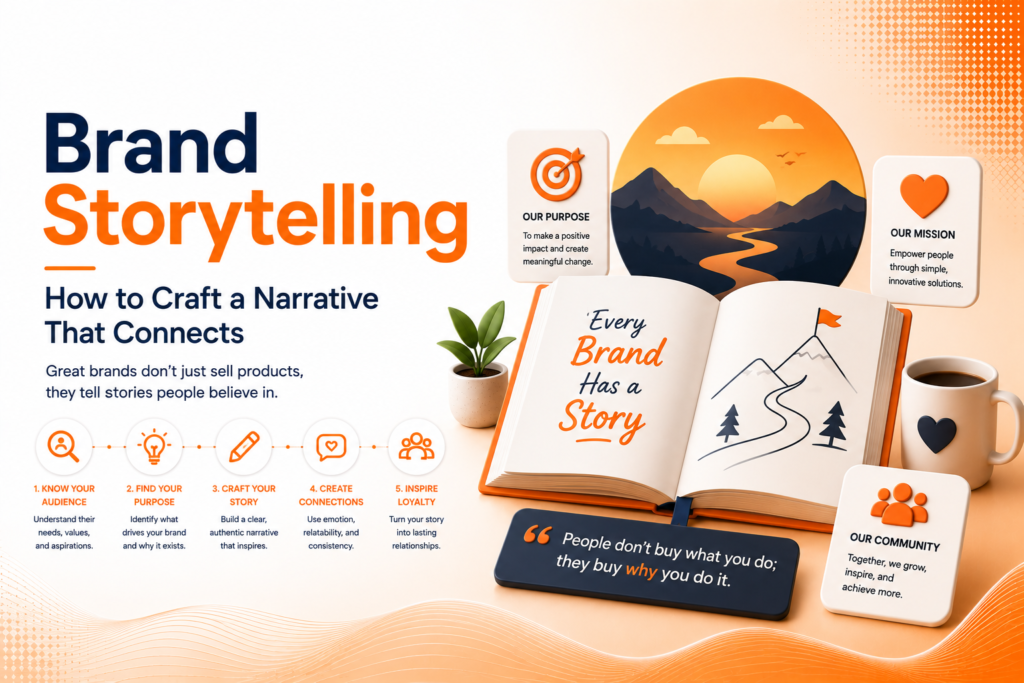
Brand Storytelling How to Craft a Narrative That Connects
Facts tell, but stories genuinely connect how to build a brand narrative customers actually remember and relate to.
Why Storytelling Outperforms Straightforward Facts
Brand storytelling works because human brains are genuinely wired to remember and engage with narratives far more effectively than isolated facts or feature lists. A business simply listing its services communicates information, but a business sharing why it exists, what challenge it overcame, or who it genuinely serves creates emotional connection that facts alone rarely achieve.
Why brand storytelling matters becomes clear when comparing two approaches to the same information: “We offer web development services” versus “We started this company after watching too many small businesses lose customers to outdated, confusing websites.” The second version creates genuine context and emotional resonance the first simply can’t replicate.
The Building Blocks of a Compelling Brand Narrative
How to craft a brand story involves identifying and structuring several genuine narrative elements that together create authentic emotional resonance.
- A genuine origin story explaining why the business exists
- Clear challenges or obstacles that shaped the company’s mission
- Specific, human details rather than generic corporate language
- Consistent narrative threads across every brand touchpoint
- A clear connection between your story and customer benefit
When these elements work together, brand storytelling creates genuine memorability and emotional connection that purely factual messaging struggles to achieve on its own.
Ready for a brand story that genuinely connects with your audience?
Finding Your Genuine Origin Story
Every business has some version of an origin story the specific circumstances, frustration, or opportunity that led to its founding even if that story hasn’t been consciously articulated or shared publicly before. Brand narrative development often starts simply by asking founders to genuinely explain why they started the business, beyond just identifying a market opportunity.
The most compelling origin stories typically include specific, human details rather than generic business language. A founder’s personal frustration with an existing industry problem, a specific moment of realization, or genuine challenges overcome during the early days all create far more memorable narrative than a vague statement about “seeing an opportunity in the market.”
💡
Tip
Ask your founder or leadership team to describe, in genuinely specific detail, the exact moment they decided to start the business. That specific memory often contains the authentic narrative seed worth building your broader brand story around.
Connecting Your Story to Customer Benefit
Storytelling strategy fails when a brand narrative remains entirely self-focused, discussing only the company’s own journey without ever connecting that story back to genuine customer benefit or shared values. The most effective brand stories create a clear bridge between the company’s origin and mission, and the specific problem or aspiration that resonates with the actual audience being addressed.
This means framing your story not just as “here’s what happened to us,” but as “here’s why that experience means we genuinely understand and can solve your specific problem.” This customer-centered framing transforms an interesting company history into a narrative that feels directly relevant to the person actually reading or hearing it.
55%
Of consumers are more likely to buy from brands with a compelling story
22x
More memorable information when delivered through narrative vs facts alone
92%
Of consumers want brands to make ads that feel like genuine stories
Maintaining Narrative Consistency Across Touchpoints
Brand story examples that succeed long-term maintain consistent narrative threads across every customer touchpoint website copy, social media, sales conversations, and customer support all reinforcing the same authentic core story, rather than presenting an inconsistent or forgotten narrative that only appears occasionally in isolated marketing campaigns.
This consistency doesn’t mean literally repeating the exact same words everywhere. It means ensuring the underlying values, tone, and narrative themes remain recognizable and coherent regardless of which specific touchpoint a customer happens to encounter, reinforcing brand identity through cumulative, consistent exposure over time.
Letting Your Story Evolve Authentically
Storytelling in marketing shouldn’t remain frozen at a company’s founding moment indefinitely. As a business grows, evolves, and takes on new challenges, the brand narrative genuinely benefits from evolving alongside it — incorporating new chapters, customer success stories, or evolved mission statements that reflect authentic current reality rather than an outdated origin story that no longer fully represents where the business actually stands today.
This evolution should feel like a natural continuation rather than an abrupt, disconnected pivot. The strongest evolved brand narratives maintain clear threads back to original founding values, even as the specific details and current chapter of the story genuinely change over time.
Customers don't remember your list of service they remember the story that made them feel like you genuinely understood their problem.
Common Brand Storytelling Mistakes to Avoid
Even well-intentioned businesses fall into familiar traps: telling a purely self-focused story disconnected from customer relevance, using generic corporate language instead of specific, human details, or maintaining an outdated narrative that no longer authentically reflects the current business.
The fix isn’t manufacturing a dramatic story that doesn’t exist it’s finding and articulating the genuine, specific story that already exists within your business’s real history and values.
How IWS Solutions Can Help
Our team helps businesses uncover and articulate authentic brand stories, weaving genuine narrative into website copy, marketing materials, and brand identity that creates real, lasting customer connection.