
REBRANDING
BRANDING
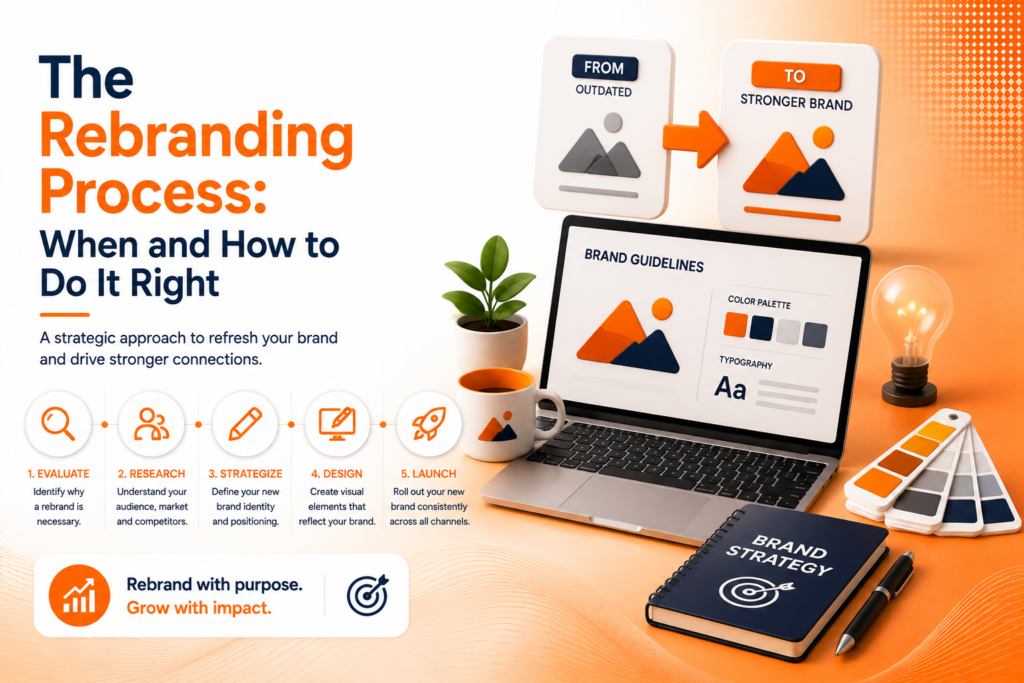
The Rebranding Process: When and How to Do It Right
A significant undertaking that can genuinely transform a business or quietly confuse loyal customers if approached without a clear strategy.
Why Rebranding Requires More Than a New Logo
The rebranding process gets frequently mistaken for simply updating a logo or color scheme, when genuine rebranding actually involves reconsidering positioning, messaging, and how a business wants to be perceived moving forward. A surface-level visual update without addressing underlying strategy rarely delivers the transformation a business is genuinely hoping to achieve.
When to rebrand matters as much as how, since rebranding without a clear, compelling reason risks confusing loyal customers and diluting hard-earned brand recognition without delivering proportional benefit. Understanding whether your situation genuinely calls for full rebranding, or simply a lighter refresh, shapes everything that follows.
The Building Blocks of a Successful Rebrand
Rebranding strategy succeeds through a structured combination of research, strategic decision-making, and careful execution planning.
- Clear business reasons justifying the rebrand’s scope
- Genuine research into current market perception
- Strategic repositioning before any visual redesign begins
- A phased rollout plan minimizing customer confusion
- Consistent internal alignment before public launch
When these elements are addressed methodically, a rebrand genuinely strengthens a business rather than simply changing its appearance without underlying strategic purpose.
Ready for a rebrand that genuinely strengthens your business?
Recognizing When Rebranding Genuinely Makes Sense
When to rebrand typically comes down to a handful of legitimate triggers: a merger or acquisition requiring unified identity, a significant shift in business direction or target audience, outdated visual identity actively hurting credibility, or negative brand associations requiring genuine distance from past perception issues.
Rebranding purely out of boredom with existing visuals, without a genuine underlying business reason, often risks disrupting established recognition without delivering proportional strategic benefit. The strongest rebrand decisions trace back to a clear, articulable business reason rather than aesthetic preference alone.
💡
Tip
Before committing to a full rebrand, write down the specific business problem it's meant to solve. If you can't articulate a clear answer beyond "it looks outdated," a lighter refresh may serve you better than a complete rebrand.
Brand Refresh vs Full Rebrand
Brand refresh vs rebrand represents an important distinction many businesses skip evaluating before committing significant resources. A refresh updates visual elements modernizing a logo, adjusting color palette, refining typography while maintaining core brand recognition and equity already built with existing customers.
A full rebrand goes considerably further, potentially including a new name, completely reimagined visual identity, and fundamentally repositioned messaging. This more dramatic approach makes sense when the underlying business itself has genuinely changed direction, but it also carries considerably higher risk of temporarily confusing established customer relationships during the transition.
77%
Of B2B marketing leaders say brand recognition is critical to growth
23%
Average revenue increase following a strategically executed rebrand
58%
Of failed rebrands cite insufficient customer communication as a key factor
Starting With Research, Not Redesign
An effective rebranding checklist begins with genuine research understanding how customers, employees, and the broader market currently perceive the brand, identifying specific gaps between that current perception and where the business genuinely wants to be positioned moving forward. Skipping this research phase risks solving the wrong problem entirely.
This research should inform strategic positioning decisions before any visual design work begins. A beautifully redesigned logo built on unclear or unresearched strategic positioning often fails to address whatever underlying issue actually prompted the rebranding decision in the first place.
Executing a Phased, Well-Communicated Rollout
How to rebrand a business successfully includes careful attention to rollout sequencing, not just the final creative output itself. A phased approach internal team alignment and training first, followed by gradual public communication explaining the change and its reasoning helps minimize the confusion that an abrupt, unexplained visual change can otherwise create among loyal customers.
Clear communication throughout this transition matters significantly. Customers who understand why a change happened, and what genuinely remains consistent despite the new visual identity, adapt far more smoothly than those left to interpret a sudden change without any context or explanation provided.
A rebrand doesn't succeed because the new logo looks better it succeeds because it genuinely solves the strategic problem that justified changing in the first place.
Common Rebranding Mistakes to Avoid
Even well-resourced businesses fall into familiar traps: rebranding without a clear strategic reason, skipping research in favor of jumping straight to redesign, or launching a significant visual change without adequately communicating the reasoning to existing customers beforehand.
The fix isn’t avoiding rebranding it’s approaching it strategically. A well-researched, clearly communicated rebrand consistently outperforms a rushed visual update lacking genuine underlying purpose.
How IWS Solutions Can Help
Our team guides businesses through the complete rebranding process, from strategic research to phased rollout, ensuring your rebrand genuinely strengthens your market position rather than simply changing your visuals.