
BRAND PSYCHOLOGY
LOGO DESIGN
The Psychology of Shapes in Logo and Brand Design
Before a viewer reads a single letter, the basic shape of your logo is already communicating something about your brand.
Why Shape Choice Shapes Perception Before Words Do
Psychology of shapes in branding operates on a genuinely subconscious level viewers process basic geometric forms faster than they process text, meaning a logo’s underlying shape communicates an impression before anyone has consciously registered a company name or tagline at all.
Shapes in logo design carry associations that, while not universally rigid, follow fairly consistent patterns across most audiences. Understanding these associations helps ensure a logo’s fundamental shape genuinely reinforces the brand personality it’s meant to represent, rather than accidentally working against it through an unconsidered geometric choice.
The Building Blocks of Strategic Shape Selection
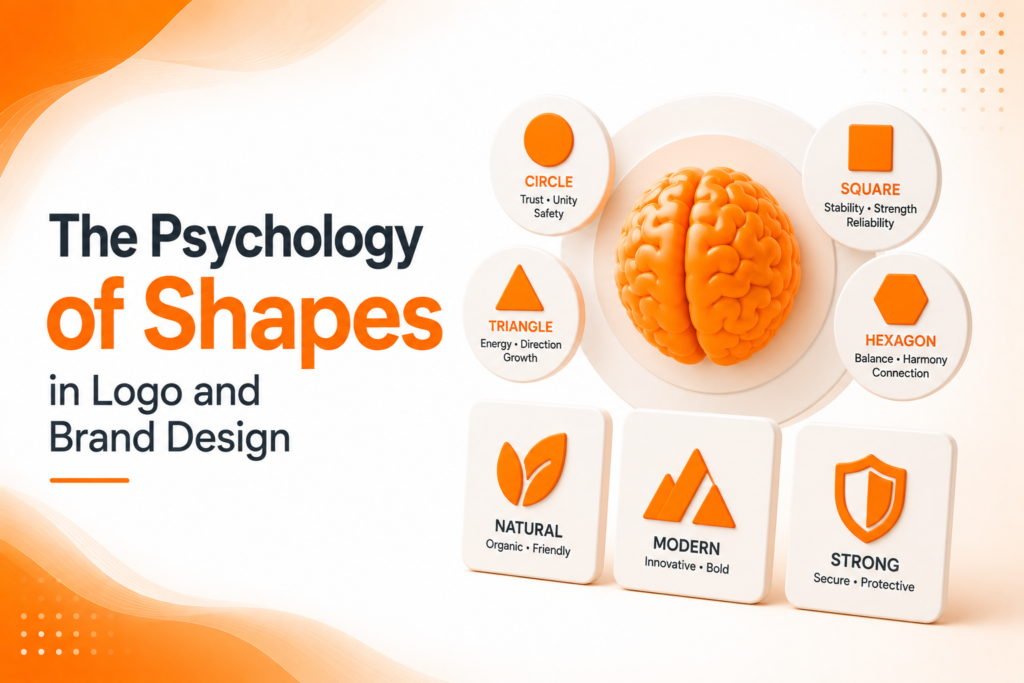
Shape meaning in design follows patterns worth understanding before committing to a specific geometric direction for any logo or brand mark.
- Circles and curves suggesting warmth, community, and continuity
- Squares and rectangles suggesting stability, trust, and reliability
- Triangles suggesting direction, energy, and dynamic movement
- Organic, irregular shapes suggesting creativity and individuality
- Combination shapes blending multiple associations deliberately
When shape selection is deliberate rather than arbitrary, it reinforces rather than undermines the brand personality a logo is meant to communicate.
Ready for a logo shape that genuinely reinforces your brand?
What Curved Shapes Communicate
Circle vs square logo comparisons consistently reveal circles and other curved shapes communicating warmth, unity, and approachability. Circles have no beginning or end, subconsciously suggesting continuity, community, and inclusiveness associations explaining why many brands focused on connection, care, or togetherness gravitate toward circular or curved logo elements.
Curved shapes more broadly also tend to feel softer and less rigid than angular alternatives, making them common choices for brands wanting to project friendliness, approachability, or emotional warmth rather than more formal, corporate positioning. This softer quality can work particularly well for brands in healthcare, community organizations, or consumer products emphasizing genuine care and connection.
💡
Tip
List three words describing your brand's desired personality, then check whether your current logo's dominant shape genuinely aligns. A mismatch between intended personality and actual shape choice often explains subtle brand perception issues.
What Angular Shapes Communicate
Geometric shapes branding built around squares and rectangles typically communicates stability, structure, and reliability. The straight lines and right angles suggest order and dependability, explaining why many financial institutions, technology companies, and professional services gravitate toward square or rectangular logo elements to reinforce trustworthy, established positioning.
Triangles carry a genuinely different association their pointed, directional shape suggests movement, energy, and progress, making them common choices for brands wanting to convey innovation, forward momentum, or dynamic growth. This directional quality creates a sense of purposeful movement that more static, symmetrical shapes like squares or circles simply don’t communicate as naturally.
65%
Of consumers form shape-based brand impressions within 400 milliseconds
43%
Higher trust perception for square/rectangular logos in financial services
58%
Of tech startups favor triangular or angular elements suggesting innovation
The Role of Organic, Irregular Shapes
Logo shape psychology also encompasses organic, irregular forms shapes that deliberately avoid perfect geometric precision, often suggesting creativity, individuality, and a genuinely human, handcrafted quality. These irregular shapes work particularly well for brands wanting to differentiate from more rigid, corporate geometric competitors within their specific industry.
This organic approach carries genuine risk alongside its differentiation benefit, though. Irregular shapes can sometimes read as less polished or professional if not executed with genuine skill and intention, making the distinction between “deliberately organic” and “simply unrefined” a genuinely important execution detail worth careful attention during the design process.
Considering Cultural and Industry Context
Psychology of shapes principles provide useful general guidance, but genuine application requires considering specific industry conventions and cultural context too. If every competitor in your specific space uses angular, geometric shapes to project stability, choosing a distinctly different, curved approach might actually help a brand stand out more effectively than conforming to that expected industry pattern.
Cultural context also matters for businesses with international audiences, since specific shape associations can vary somewhat across different cultures, though the broader emotional patterns curves feeling softer, angles feeling more structured tend to hold reasonably consistent across most global audiences and markets.
A logo's shape speaks before its name does choosing it deliberately means your brand's very first impression is genuinely intentional, not accidental.
Common Shape Psychology Mistakes to Avoid
Even design-conscious businesses fall into familiar traps: choosing a logo shape purely on personal aesthetic preference without considering psychological alignment, following industry convention exactly without genuine differentiation, or executing organic shapes without sufficient design skill, resulting in an unpolished rather than intentionally creative impression.
The fix isn’t overthinking every geometric decision endlessly it’s making deliberate, informed shape choices that genuinely reinforce your brand’s intended personality and positioning.
How IWS Solutions Can Help
Our team applies genuine shape psychology principles when developing logo and brand identity systems, ensuring even the most basic geometric choices reinforce your brand’s intended personality from the very first impression.