
LOGO EVOLUTION
REBRANDING
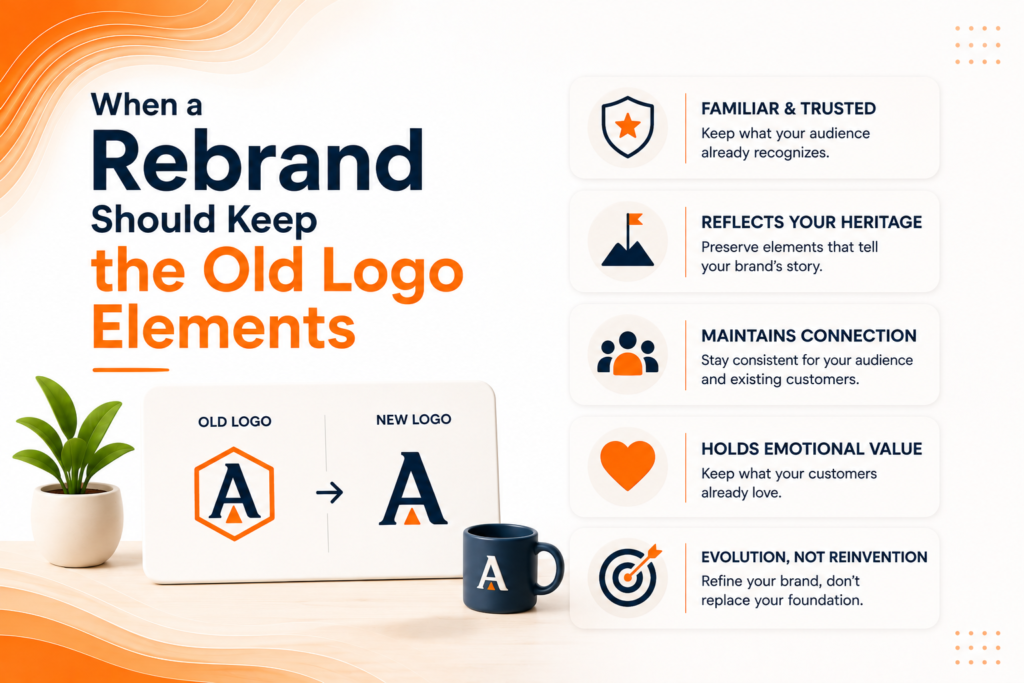
When a Rebrand Should Keep the Old Logo Elements
Starting completely fresh isn’t always the strongest move sometimes the smartest rebrand evolves what’s already working.
Why Complete Reinvention Isn't Always the Right Move
Rebrand keeping old logo elements represents a genuinely underappreciated strategy, since many businesses assume rebranding automatically means starting entirely from scratch. In reality, evolving a logo vs starting over deserves genuine, deliberate consideration, since years of accumulated brand recognition represent real, valuable equity that a complete overhaul discards entirely, regardless of whether that recognition genuinely needed preserving.
Logo evolution approaches recognize that customers have built genuine familiarity and trust around existing visual elements, even ones that might feel dated to internal stakeholders who see the logo daily. What feels genuinely stale to a business owner after years of exposure often still reads as perfectly recognizable and trustworthy to the actual customers encountering it.
The Building Blocks of Deciding What to Preserve
When to keep brand equity requires honestly evaluating which specific logo elements genuinely still serve the brand versus which have become genuine liabilities worth changing.
- Strong existing name recognition worth genuinely preserving
- Distinctive shapes or symbols customers already associate with the brand
- Color associations built through years of consistent, genuine exposure
- Outdated typography or execution genuinely worth modernizing
- Overly complex elements that no longer scale well across applications
Understanding this distinction helps businesses evolve thoughtfully rather than either clinging to outdated elements unnecessarily or discarding genuinely valuable brand equity unnecessarily.
Ready for a logo evolution that preserves what's genuinely working?
Assessing What Genuine Brand Equity Actually Exists
Partial rebrand decisions should begin with genuine research into what customers actually recognize and associate with your current logo, rather than relying purely on internal opinion about what feels outdated. A distinctive shape, specific color combination, or particular symbol might carry considerably more genuine recognition value than internal stakeholders who see the logo constantly tend to appreciate from their overly familiar, potentially biased perspective.
This assessment often reveals that certain elements genuinely deserve preservation even within an otherwise significant redesign. A recognizable icon or symbol might warrant refinement and modernization rather than complete replacement, retaining the core recognizable shape while improving execution, proportions, or technical scalability for modern digital applications.
💡
Tip
Before finalizing any rebrand direction, show current and long-term customers both a complete redesign and an evolved version retaining key elements. Their genuine recognition and reaction often reveals more than internal stakeholder preference alone.
When Typography and Execution Genuinely Need Updating
Logo redesign vs new logo decisions often center specifically on typography and execution quality, even when the underlying core concept or symbol genuinely deserves preservation. Dated typography choices, poor scalability across modern digital applications, or execution quality that hasn’t kept pace with contemporary design standards represent genuine reasons for updating, distinct from questioning whether the fundamental brand concept itself needs complete reinvention.
This distinction matters practically, since modernizing typography and refining execution while retaining core recognizable elements like a distinctive symbol or established color palette often produces a genuinely fresher, more contemporary brand presence without sacrificing the accumulated recognition and equity built through years of consistent market presence.
73%
Of successful major rebrands retained at least one core visual element
40%
Higher customer retention through gradual evolution vs abrupt complete redesign
5-7 Years
Typical timeframe before a logo genuinely benefits from evolutionary refresh
The Case for Gradual, Evolutionary Change
Evolving a logo vs starting over often favors gradual evolution specifically because abrupt, complete redesigns risk genuine customer confusion and lost recognition during the transition period, particularly for established brands with significant existing market presence. A more gradual evolution, refining rather than replacing, allows customers to adapt naturally without the jarring disconnect a complete overhaul can create.
Many iconic brands have followed exactly this evolutionary path over decades, making incremental refinements to typography, proportions, and execution while maintaining core recognizable elements throughout. This approach demonstrates that genuine modernization doesn’t require complete reinvention, particularly for brands with substantial existing recognition worth genuinely protecting.
Recognizing When Complete Reinvention Genuinely Makes Sense
That said, certain situations genuinely warrant complete reinvention rather than evolution a significant business pivot, negative brand associations requiring genuine distance from past perception, or a merger creating an entirely new combined entity all represent scenarios where preserving old logo elements might actually work against the strategic goals driving the rebrand in the first place.
Distinguishing between these scenarios requires honest evaluation of your specific rebranding motivation. If the goal is genuine modernization and refreshment of an already-successful brand, evolution typically serves better than complete reinvention. If the goal involves genuine strategic repositioning or distancing from past associations, complete reinvention may be genuinely necessary despite the recognition cost involved.
A logo doesn't need to be replaced to feel modern sometimes it just needs to be refined enough to catch up with the brand that's grown around it.
Common Logo Evolution Mistakes to Avoid
Even thoughtful businesses fall into familiar traps: discarding genuinely valuable brand equity purely out of internal boredom with a familiar logo, retaining outdated elements purely out of nostalgia despite genuine strategic reasons to change, or failing to research actual customer recognition before making significant redesign decisions.
The fix isn’t defaulting to either complete preservation or complete reinvention automatically it’s honestly assessing what genuine equity exists and evolving deliberately based on real strategic goals and customer research.
How IWS Solutions Can Help
Our team helps businesses navigate logo evolution decisions thoughtfully, assessing genuine brand equity worth preserving alongside elements that genuinely warrant modernization or change