
BRANDING
STYLE GUIDE VS BRAND BOOK
The Difference Between a Style Guide and a Brand Book
Two terms often used interchangeably, but they genuinely serve different purposes here’s how to know which one your business actually needs.
Why This Distinction Actually Matters
Style guide vs brand book confusion is genuinely common, since both documents relate to brand consistency and are frequently referenced interchangeably in casual conversation. In practice, though, they typically serve different scopes and purposes, and understanding this difference helps businesses know exactly what document they actually need to create or request.
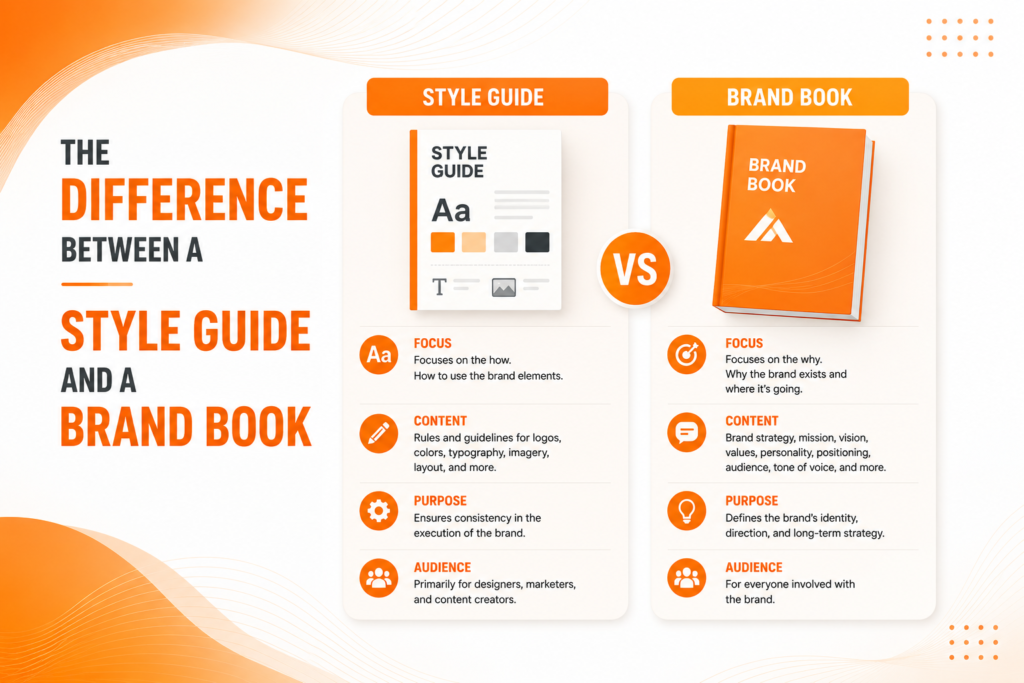
Difference between style guide and brand book distinctions generally come down to depth and purpose. A style guide typically focuses narrowly on practical, tactical application rules how to use the logo, which colors and fonts to apply. A brand book typically encompasses a broader, more strategic narrative about who the brand genuinely is, beyond just visual application rules alone.
The Building Blocks of Each Document Type
What is a brand book, compared to a style guide, comes down to understanding the genuinely different scope and audience each document typically serves.
- Style guides focus on practical, tactical application rules
- Brand books encompass strategic narrative and brand philosophy
- Style guides serve designers and content creators directly
- Brand books serve broader stakeholders including leadership and partners
- Both documents work together rather than replacing each other
Understanding these distinct purposes helps determine which document, or combination, your business genuinely needs to create.
Ready for brand documentation that genuinely serves your team's needs?
What a Style Guide Typically Covers
A brand guidelines document focused specifically as a style guide typically covers highly tactical, practical specifications exact logo usage rules and clear space requirements, precise color codes for print and digital, typography hierarchy and font pairings, and specific do’s and don’ts for common application scenarios designers and content creators genuinely encounter regularly.
This document functions primarily as a practical reference tool, answering specific “how do I apply this correctly” questions that arise during actual design and content creation work. Its value lies in tactical clarity and specificity, ensuring consistent visual application across every piece of content or design work regardless of who’s actually creating it.
💡
Tip
If your team primarily asks "what color code should I use" or "how much space around the logo," you likely need a style guide. If they ask "what does our brand genuinely stand for," you likely need a brand book.
What a Brand Book Typically Encompasses
Brand book vs style guide distinctions become clearer when considering that a brand book typically encompasses considerably more strategic, narrative content beyond pure visual application rules. This includes the brand’s genuine mission, vision, and values, target audience understanding, brand voice and personality description, competitive positioning, and often the brand’s origin story and broader strategic context.
This more comprehensive document serves a broader audience beyond just designers marketing teams crafting messaging, sales teams positioning the brand to prospects, leadership communicating brand direction internally, and sometimes external partners or investors needing genuine understanding of what the brand represents strategically, not just how to apply its visual elements correctly.
23%
Higher brand consistency for companies maintaining both documents
67%
Of design teams reference style guides regularly for tactical decisions
45%
Of marketing teams reference brand books for messaging and positioning
Why Many Businesses Genuinely Need Both
Difference between style guide and brand book considerations often lead businesses to conclude they genuinely need both documents, serving different but complementary purposes within the same overall brand consistency effort. The style guide handles tactical, day-to-day application questions, while the brand book provides the strategic context and narrative that informs why those specific tactical choices were made in the first place.
Smaller businesses sometimes combine both into a single, more streamlined document, particularly when the team accessing brand documentation is small enough that separate, specialized documents for different audiences genuinely aren’t necessary. Larger organizations, with more distinct roles and stakeholders, typically benefit from maintaining these as genuinely separate, purpose-built documents.
How These Documents Work Together in Practice
A well-functioning brand system uses the brand book to establish genuine strategic understanding why the brand exists, what it stands for, who it serves while the style guide translates that strategic foundation into practical, consistent visual and tactical application across every actual touchpoint where the brand shows up.
This relationship means the style guide should genuinely reflect and reinforce the brand book’s strategic direction, rather than existing as an entirely separate, disconnected document. Visual choices documented in the style guide should trace back logically to the personality and positioning established within the broader brand book’s strategic narrative.
A style guide tells your team how to apply the brand correctly. A brand book tells them why it matters in the first place.
Common Brand Documentation Mistakes to Avoid
Even organized businesses fall into familiar traps: creating only a style guide without genuine strategic context explaining why those visual choices exist, building an extensive brand book without practical, tactical application guidance, or maintaining both documents without ensuring they genuinely align and reinforce each other consistently.
The fix isn’t choosing one document type exclusively it’s understanding what your specific team genuinely needs, then creating documentation that serves both tactical application and strategic understanding as appropriate.
How IWS Solutions Can Help
Our team creates both style guides and comprehensive brand books as needed, ensuring your business has genuine tactical application clarity alongside the strategic brand narrative that gives those choices meaning.