
SEO
USER METRICS
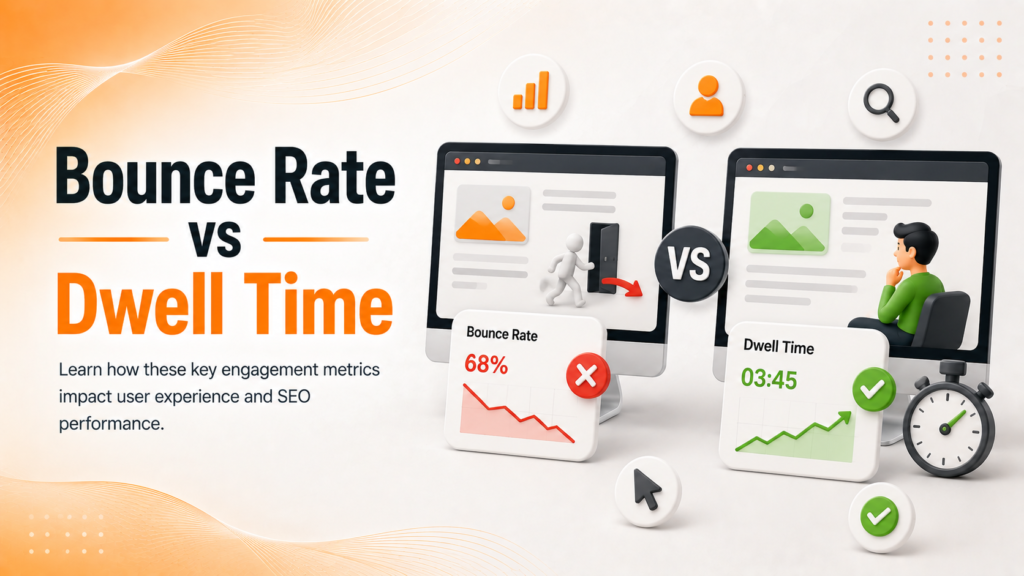
Bounce Rate vs Dwell Time: What They Really Tell You
Two metrics often confused for each other actually tell very different stories about how visitors genuinely experience your site.
Why These Metrics Get Misread So Often
Bounce rate and dwell time frequently get treated as interchangeable indicators of “how well a page is performing,” but they measure genuinely different behaviors, and conflating them leads to misguided conclusions about what’s actually happening on a page. Bounce rate simply tracks whether a visitor left after viewing just one page, without registering how long they stayed or whether they actually found what they needed.
Dwell time, by contrast, measures how long a visitor spent on a page before returning to search results, offering a genuinely more nuanced signal of engagement even a single-page visit can reflect real satisfaction if the visitor stayed long enough to find their answer.
The Building Blocks of Reading These Metrics Correctly
Genuinely understanding bounce rate and dwell time means examining several distinct signals together, not just watching either number rise or fall in isolation.
- Page type and its genuine intent (informational vs transactional)
- Time on page relative to content length
- Exit behavior did they leave the site or navigate elsewhere
- Traffic source and how it shapes visitor expectations
- Conversion or goal completion tied to the visit
When these signals are read together, bounce rate and dwell time reveal genuine visitor intent rather than a single misleading number.
Ready to understand what your site's metrics are genuinely telling you?
When a High Bounce Rate Isn't Actually Bad
A high bounce rate on a blog post or FAQ page often gets flagged as a problem, but if visitors are genuinely finding their answer quickly and leaving satisfied, that single-page exit reflects success, not failure. Context specifically page type and genuine search intent determines whether a bounce is a warning sign or simply an efficient answer delivered.
Dwell time helps distinguish between these two scenarios. A short visit followed by a bounce suggests the page failed to deliver, while a longer visit before that same bounce suggests the visitor genuinely engaged with the content before moving on.
💡
Tip
Before reacting to a high bounce rate, check the average time on page for that same URL. A long dwell time paired with a high bounce often means the content is working exactly as intended.
What Dwell Time Actually Reveals About Content Quality
Dwell time offers a genuinely useful proxy for content relevance and quality, since search engines infer that visitors who return quickly to search results after a brief visit likely didn’t find what they were looking for. Pages with consistently short dwell times relative to their content length often signal a mismatch between what the page promises and what it genuinely delivers.
This makes dwell time a more actionable signal than bounce rate alone for identifying which pages need genuine content improvement versus which are simply serving their purpose efficiently.
47%
Average bounce rate considered typical for content and blog pages
2:30
Average dwell time associated with strong search ranking performance
63%
Of marketers say dwell time better reflects genuine content quality than bounce rate alone
Reading Both Metrics Together for Real Insight
Neither bounce rate nor dwell time tells a complete story alone, but examined together across page type, traffic source, and genuine visitor intent, they reveal considerably more about actual content performance. A page with low bounce and low dwell time might indicate visitors are clicking through without genuinely engaging, while high bounce and high dwell time often signals content that genuinely satisfied the visitor’s need.
This combined view helps prioritize which pages genuinely need improvement versus which are already performing exactly as intended for their specific purpose.
Turning Metrics Into Genuine Content Decisions
Bounce rate and dwell time only deliver real value when they inform actual content and UX decisions, rather than being tracked as isolated vanity numbers. Pages with poor combined signals should be reviewed for genuine content-intent mismatch, unclear structure, or slow load times undermining engagement.
This analysis also benefits from ongoing review rather than a single audit, since visitor behavior and search intent for a given topic can shift meaningfully over time.
Bounce rate asks whether someone left dwell time asks whether they got what they came for before they did.
Common Mistakes to Avoid
Even experienced marketers fall into familiar traps: treating every high bounce rate as a failure regardless of context, or ignoring dwell time entirely while over-indexing on bounce rate alone.
The fix isn’t chasing a lower bounce rate in isolation it’s reading both metrics together against genuine page intent and content quality.
How IWS Solutions Can Help
Our team analyzes bounce rate and dwell time together with genuine page intent, helping businesses identify which content truly needs improvement and which is already performing well.