
ECOMMERCE
AMAZON VS OWN STORE
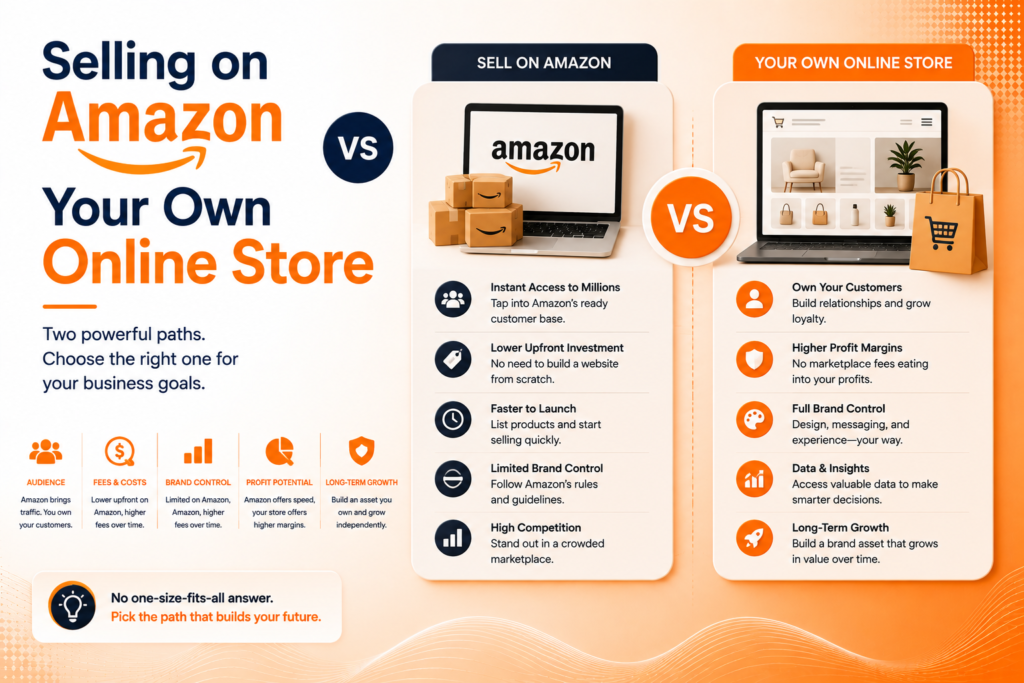
Selling on Amazon vs Your Own Online Store
Massive built-in traffic versus complete brand control here’s how to decide where your products genuinely belong, or whether you need both.
Why This Decision Shapes Your Entire Business Model
Selling on Amazon vs your own store represents a genuine strategic fork, not simply a matter of picking whichever platform seems more popular. Amazon offers immediate access to millions of active shoppers already primed to buy, while your own store offers complete control over branding, customer relationships, and profit margins that a marketplace platform inherently limits.
Amazon vs Shopify comparisons often miss that these aren’t necessarily competing options many successful businesses genuinely use both simultaneously, treating each platform for what it does best rather than viewing the decision as strictly either-or from the outset.
The Building Blocks of Each Selling Channel
Sell on Amazon or own website decisions involve genuine tradeoffs across several important business factors.
- Amazon provides immediate, massive built-in traffic
- Your own store provides complete brand and customer control
- Amazon takes significant fees reducing per-sale profit margins
- Your own store requires building traffic independently
- Customer data and relationships stay with you on your own site
Understanding these tradeoffs helps determine whether Amazon, your own store, or a combination genuinely fits your specific business goals.
Ready to build an online store that fits your actual growth strategy?
The Genuine Advantages of Selling on Amazon
Amazon FBA and marketplace selling offer a compelling advantage for new or growing businesses: immediate access to an enormous, already-engaged shopper base without needing to build traffic and trust from zero. Amazon’s existing reputation for reliable delivery and easy returns also transfers some inherent trust to sellers, reducing the credibility barrier a brand-new independent store often faces.
Fulfillment by Amazon further removes significant operational burden, handling storage, packing, shipping, and customer service inquiries related to fulfillment on behalf of sellers. For businesses without existing logistics infrastructure, this can genuinely accelerate the path to selling at scale without requiring substantial upfront warehouse or shipping investment.
💡
Tip
Calculate your actual profit margin after Amazon's referral and fulfillment fees before committing significant inventory. Products with thin margins can become genuinely unprofitable once Amazon's fee structure is properly factored in.
The Real Cost of Amazon's Convenience
Amazon marketplace pros and cons reveal a significant tradeoff behind that convenient built-in traffic: Amazon typically takes 15% or more in referral fees, plus additional fulfillment costs if using FBA, meaningfully compressing profit margins compared to selling directly through your own store where you control the entire transaction and customer relationship.
Brand control also diminishes significantly on Amazon. Sellers operate within Amazon’s design constraints, competing directly alongside similar products in the same search results, and critically, Amazon retains ownership of the customer relationship and data meaning sellers generally can’t build genuine ongoing marketing relationships with their own Amazon customers the way they could through an owned store’s email list.
15%+
Typical Amazon referral fee reducing per-sale profit margin
60%
Of online product searches now start directly on Amazon
100%
Customer data and relationship ownership retained through your own store
The Genuine Advantages of Your Own Online Store
Building your own store means complete control over brand presentation, customer experience, and critically direct ownership of customer data and relationships. Every sale through your own store builds genuine, ongoing marketing equity: email lists, retargeting audiences, and repeat customer relationships that Amazon’s marketplace structure simply doesn’t allow sellers to build directly.
Profit margins also improve significantly without Amazon’s substantial fee structure taking a considerable cut of every transaction. While platforms like Shopify do involve their own transaction and subscription fees, they’re typically considerably lower than Amazon’s combined referral and fulfillment costs, particularly at meaningful sales volume.
The Real Challenge of Going It Alone
The significant tradeoff with an independent store is the absence of Amazon’s built-in traffic. Every visitor needs to be actively earned through SEO, paid advertising, social media, or other marketing efforts a considerably more demanding and often slower path to meaningful sales volume compared to simply listing products where millions of already-shopping customers are actively searching.
This makes an independent store a genuinely stronger fit for businesses with existing marketing capability, an established audience, or patience for building organic traffic over time, rather than businesses needing immediate sales volume without the resources to drive their own traffic from scratch.
Amazon rents you access to millions of shoppers. Your own store lets you build something you actually own the right choice depends on which one your business genuinely needs right now.
Common Amazon vs Own Store Mistakes to Avoid
Even experienced sellers fall into familiar traps: underestimating Amazon’s fee impact on genuine profitability, launching an independent store without a realistic traffic generation plan, or relying entirely on one channel without considering how a diversified, multi-channel approach could reduce platform dependency risk.
The fix isn’t choosing one channel exclusively forever it’s honestly matching channel choice to your current resources, then potentially expanding to a multi-channel strategy as the business genuinely grows.
How IWS Solutions Can Help
Our team helps businesses build independent online stores that complement or reduce dependency on marketplace platforms like Amazon, giving you genuine control over your brand, customer relationships, and long-term profit margins.