
SEO
INTERNATIONAL SEO
International SEO Targeting Multiple Countries and Languages
Expanding into new markets requires more than translation here’s how to structure your site so search engines show the right version to the right audience.
Why International SEO Requires a Different Approach
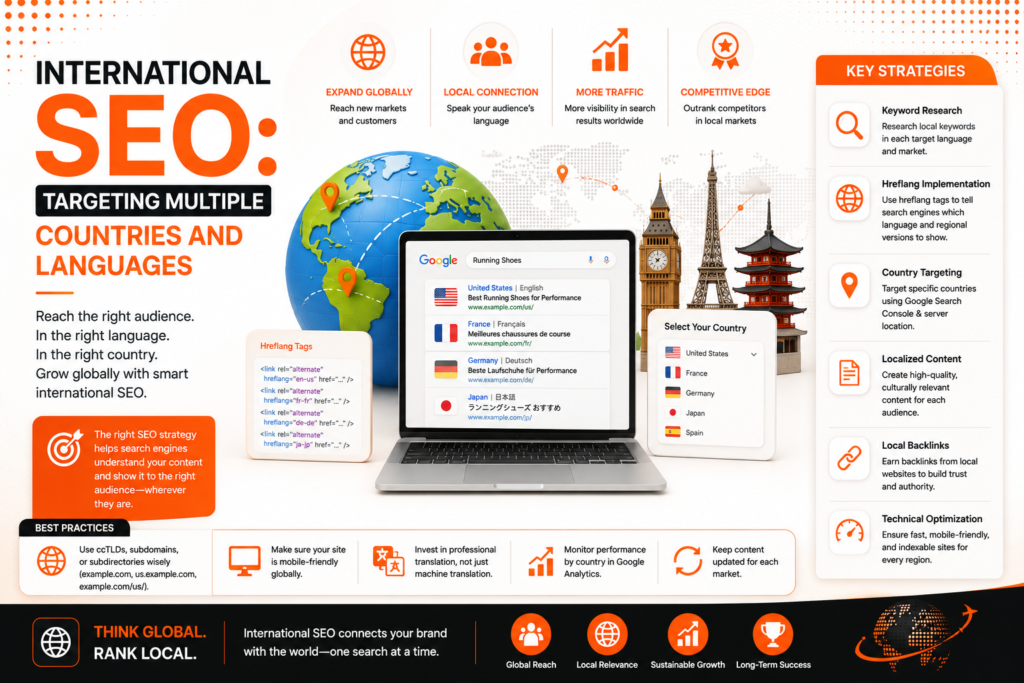
International SEO addresses a genuinely distinct challenge from standard domestic SEO: ensuring search engines correctly identify and serve the right language and country-specific version of your content to the right audience, rather than showing a UK visitor a US-focused page with different currency, spelling, or irrelevant regional information.
Multilingual SEO isn’t simply about translating existing content into additional languages. Global SEO strategy also needs to account for different search behaviors, competitors, and even different dominant search engines across various countries and regions, since search behavior genuinely varies significantly across international markets.
The Building Blocks of International SEO Strategy
International SEO strategy involves several interconnected technical and content decisions that together support genuine multi-market visibility.
- Clear URL structure separating country/language versions
- Properly implemented hreflang tags for each variant
- Genuinely localized content, not just direct translation
- Country-specific keyword research for each target market
- Local hosting or CDN considerations for regional speed
When these elements work together, search engines can confidently serve the correct version to each visitor based on their location and language preference.
Ready to expand your search visibility into new markets?
Choosing the Right URL Structure
Country-specific SEO starts with choosing how different language and regional versions of a site will be structured. Common approaches include country-code top-level domains (example.co.uk), subdomains (uk.example.com), or subdirectories (example.com/uk/) each with different implications for SEO authority sharing, cost, and technical management complexity.
Subdirectories generally offer the simplest technical implementation while still allowing clear separation of regional content, and they benefit from sharing overall domain authority across all versions. Country-code domains provide the strongest local trust signal in some markets but require managing entirely separate domains and their individual SEO authority.
💡
Tip
Before choosing a URL structure, consider your realistic resources for managing multiple site versions long-term. A simpler subdirectory structure is often more sustainable for smaller teams than juggling multiple separate country-code domains.
Implementing Hreflang Tags Correctly
Hreflang tags tell search engines which language and country a specific page version targets, helping ensure the correct version appears in search results for users in each respective location. Missing or incorrectly implemented hreflang tags frequently cause search engines to show the wrong regional version, or worse, treat different language versions as duplicate content competing against each other.
This implementation requires genuine technical care — every page needs to reference all other language/country variants, including itself, in a complete, mutually consistent set. Even experienced teams occasionally make hreflang implementation errors, making validation testing an essential step rather than an optional afterthought.
76%
Of online shoppers prefer purchasing in their native language
40%
Of consumers won't buy from websites in other languages
29%
Higher engagement for properly localized vs directly translated content
Going Beyond Translation: Genuine Localization
Multilingual SEO succeeds when content is genuinely localized, not merely translated word-for-word. Localized content adapts idioms, cultural references, currency, measurement units, and even color or imagery choices that might carry different associations across cultures, ensuring content feels genuinely native rather than obviously translated from another market’s original version.
This distinction matters significantly for conversion, beyond just search visibility. A visitor encountering awkward, literal translation immediately senses the content wasn’t genuinely created for their market, which can undermine trust even when the underlying product or service offering itself is genuinely strong and relevant.
Researching Keywords for Each Target Market
Targeting multiple countries SEO requires independent keyword research for each market, rather than assuming direct translations of your primary market’s keywords will match how audiences in other regions and languages actually search. Search terms, phrasing, and even which specific problems audiences prioritize can differ meaningfully between markets, even those sharing the same primary language.
This becomes particularly important between markets sharing English as a primary language American, British, and Australian audiences frequently use notably different terminology and phrasing for identical products or services, meaning keyword research genuinely needs separate attention for each specific market rather than one shared assumption.
International SEO doesn't fail because of bad translation alone it fails when a business assumes every market thinks, searches, and buys exactly like their home market does.
Common International SEO Mistakes to Avoid
Even experienced SEO teams fall into familiar traps: implementing hreflang tags incorrectly, relying on direct translation instead of genuine localization, or assuming keyword research from one market applies identically across every target region.
The fix isn’t rushing international expansion it’s treating each target market with the same dedicated research and technical care given to the original domestic market’s SEO strategy.
How IWS Solutions Can Help
Our team builds international SEO strategies with proper technical structure, hreflang implementation, and genuine content localization, helping businesses expand their search visibility into new markets confidently.