
ECOMMERCE
EMAIL MARKETING
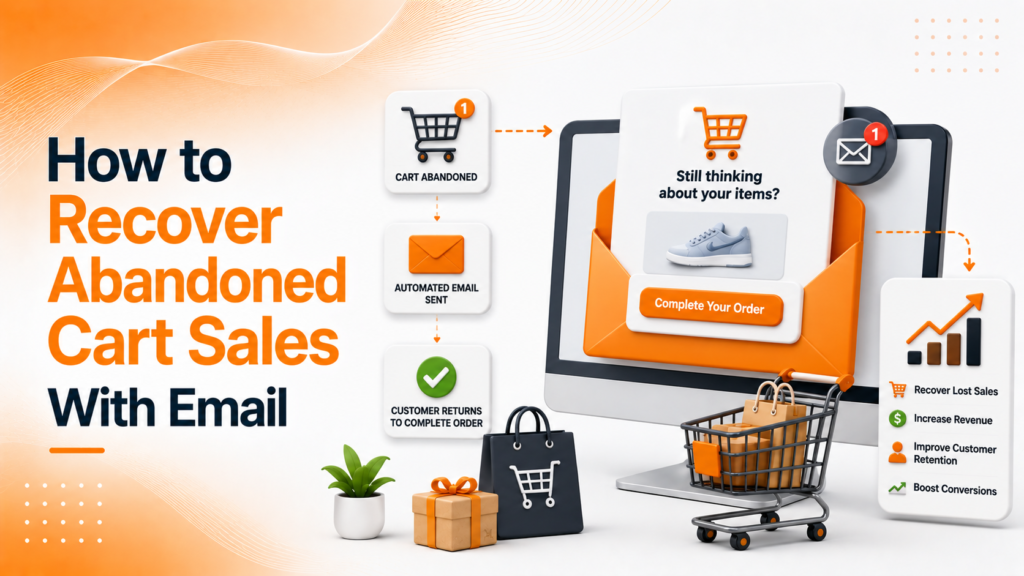
How to Recover Abandoned Cart Sales With Email
The majority of shopping carts get abandoned before checkout here’s how a well-built email sequence brings a meaningful share of those sales back.
Why Abandoned Carts Represent Genuine Recoverable Revenue
Cart abandonment rate across most online stores hovers around 70%, meaning the majority of shoppers who add items to their cart never actually complete the purchase. This isn’t necessarily lost revenue permanently many abandoned carts represent genuine purchase intent interrupted by distraction, hesitation, or simple forgetfulness rather than outright rejection of the product.
Recover abandoned cart sales through email specifically because it reaches shoppers directly, at the exact moment they were already considering a purchase, rather than requiring an entirely new marketing effort to recapture their attention from scratch through other channels.
The Building Blocks of an Effective Recovery Sequence
Abandoned cart email sequence success depends on a combination of timing, messaging, and incentive strategy working together.
- Multiple emails sent at strategically spaced intervals
- Clear reminder of exactly what was left in the cart
- Genuine urgency without resorting to false scarcity
- A meaningful incentive introduced only if needed
- Mobile-optimized design for easy one-click return to checkout
When these elements work together, an abandoned cart sequence consistently recovers a meaningful share of otherwise lost sales.
Ready to recover the sales you're currently losing to abandonment?
Timing Your First Recovery Email
Cart abandonment recovery works best when the first email sends within one to three hours of abandonment, while the purchase intent and specific product details remain genuinely fresh in the shopper’s mind. Waiting a full day or longer significantly reduces effectiveness, since interest and urgency naturally fade the longer the gap between abandonment and follow-up.
This first email should function primarily as a simple, helpful reminder rather than an aggressive sales push acknowledging that carts get abandoned for many innocent reasons, from distraction to simply needing more time to decide, without assuming the worst about why the shopper left.
💡
Tip
Include actual product images in your abandoned cart emails, not just generic text. Visual reminders of the specific item significantly outperform purely text-based reminders in recovery rate.
Building a Multi-Email Sequence
A single abandoned cart email captures some recoverable sales, but abandoned cart strategy performs considerably better as a sequence of two or three emails spaced over several days. The second email, typically sent 24 hours after abandonment, can introduce slightly more urgency or address common hesitations, such as highlighting free shipping or a clear return policy.
A potential third email, sent two to three days after abandonment, often works best as a final opportunity sometimes including a modest, genuine discount incentive for shoppers who still haven’t converted after the earlier, softer reminders, converting genuinely price-sensitive hesitation into completed sales.
70%
Average cart abandonment rate across ecommerce
45%
Open rate for abandoned cart emails, well above average marketing email rates
10.7%
Average conversion rate from abandoned cart email sequences
Writing Subject Lines That Actually Get Opened
Abandoned cart emails already benefit from naturally higher open rates than typical marketing emails, since recipients recognize the personal relevance immediately. Subject lines referencing the specific product left behind, or simply asking “did you forget something?” tend to perform particularly well, since they feel personal and directly relevant rather than generic and promotional.
Avoiding overly aggressive or guilt-inducing language matters here too subject lines that feel pushy or manipulative can actually damage brand perception, even among shoppers who might have otherwise returned to complete their purchase through a more genuinely helpful, less pressuring approach.
Knowing When to Introduce a Discount
Introducing a discount too early in the sequence can inadvertently train customers to always abandon their cart, expecting a subsequent discount email to follow automatically. Abandoned cart email sequence best practices typically reserve discount incentives for the final email only, after softer, non-discounted reminders have already had a genuine chance to recover the sale on their own merit.
This staged approach protects profit margins by only offering a discount to shoppers who genuinely needed that additional incentive to convert, rather than discounting every recovered sale unnecessarily, including those who would have completed the purchase anyway after a simple, non-discounted reminder.
An abandoned cart isn't a lost sale it's a shopper who was interested enough to almost buy, and just needs the right nudge to finish what they started.
Common Abandoned Cart Email Mistakes to Avoid
Even experienced eCommerce businesses fall into familiar traps: sending only a single recovery email, waiting too long after abandonment to follow up, or leading with a discount immediately instead of reserving it as a final, targeted incentive.
The fix isn’t more aggressive discounting it’s better sequencing. A well-timed, multi-email sequence consistently recovers more sales than either no follow-up at all or an overly aggressive, discount-first approach.
How IWS Solutions Can Help
Our team builds complete abandoned cart email sequences for eCommerce stores, from timing and messaging strategy to incentive design, helping recover sales that would otherwise be permanently lost.