
ECOMMERCE
PERSONALIZATION
Personalized Product Recommendations
Showing every customer the same generic products leaves genuine revenue on the table here’s how data-driven recommendations change that.
Why Generic Product Displays Underperform
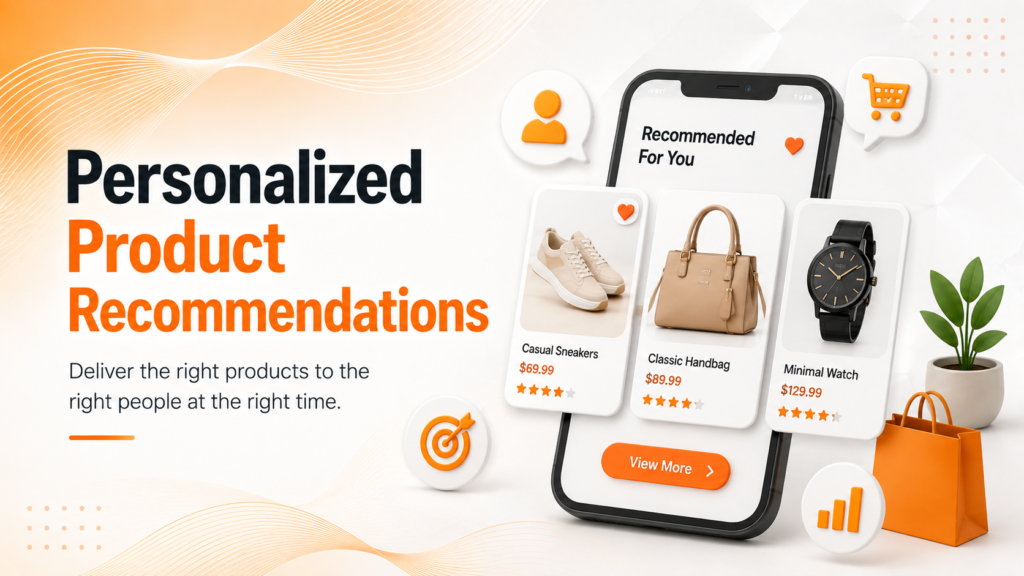
Personalized product recommendations address a genuine limitation of traditional eCommerce browsing: showing every visitor an identical product catalog regardless of their individual interests, browsing history, or purchase patterns. A product recommendation engine uses actual customer behavior data to surface items each specific visitor is genuinely more likely to want, rather than displaying the same generic bestseller list to everyone equally.
Ecommerce personalization matters because relevance directly drives conversion. A customer seeing products genuinely aligned with their demonstrated interests engages more readily than one scrolling through a generic catalog hoping to stumble across something relevant among countless unrelated options.
The Building Blocks of Effective Personalization
A personalized shopping experience relies on a combination of data collection, algorithmic processing, and strategic placement working together.
- Browsing and purchase history data collection
- Real-time behavioral signals during the current session
- Collaborative filtering based on similar customer patterns
- Strategic placement at high-visibility decision points
- Continuous algorithm refinement based on actual results
When these elements work together, recommendations feel genuinely relevant rather than randomly generated or generic.
Ready for product recommendations that actually convert?
How Recommendation Algorithms Actually Work
Recommendation algorithm approaches vary, but most eCommerce personalization relies on collaborative filtering identifying patterns among customers with similar browsing or purchase behavior, then suggesting products that similar customers ultimately purchased or engaged with. This “customers who bought this also bought” logic leverages collective behavioral data to make individually relevant suggestions.
Content-based filtering represents another common approach, analyzing specific product attributes a customer has shown interest in category, price range, style and surfacing similar items sharing those characteristics. Many sophisticated recommendation engines combine both approaches, using collaborative patterns alongside content attributes for more nuanced, accurate suggestions.
💡
Tip
Start recommendation implementation with your highest-traffic pages first product pages and cart pages typically deliver the strongest conversion lift, since visitors there have already demonstrated clear purchase intent.
Where Recommendations Deliver the Most Value
AI product recommendations perform differently depending on placement throughout the customer journey. Product page recommendations showing complementary or similar items while a customer views a specific product capture genuine cross-sell and upsell opportunity at a moment of active consideration. Cart page recommendations, shown just before checkout, can meaningfully increase average order value through relevant, last-minute additions.
Homepage personalization, tailoring the initial product display based on returning visitor history, creates a genuinely more relevant first impression than a generic, one-size-fits-all homepage layout shown identically to every visitor regardless of their actual demonstrated interests or previous browsing behavior on the site.
35%
Of Amazon's revenue attributed to personalized product recommendations
26%
Average revenue increase from implementing personalization
91%
Of consumers say they're more likely to shop with brands offering relevant recommendations
Balancing Personalization With Privacy
Ecommerce personalization requires collecting and analyzing customer behavioral data, making genuine privacy compliance and transparency essential rather than optional. Clear communication about what data is collected and how it’s used, along with genuine opt-out options where required by regulation, builds trust rather than creating the uncomfortable feeling of being surveilled that overly aggressive personalization can sometimes create.
This balance matters for long-term customer relationships beyond just legal compliance. Personalization that feels genuinely helpful surfacing products a customer is realistically interested in builds trust, while personalization that feels invasive or overly specific can actually damage the customer relationship rather than strengthening it.
Testing and Refining Recommendation Performance
A product recommendation engine’s initial configuration rarely represents its optimal, long-term performance. Continuous A/B testing comparing different recommendation algorithms, placements, or the number of items displayed reveals what genuinely drives conversion for your specific customer base and product catalog, rather than assuming a generic industry best practice applies identically to every business.
This ongoing refinement matters because customer behavior and preferences genuinely shift over time, meaning a recommendation system optimized once at launch gradually becomes less accurate without continued monitoring and adjustment based on actual, current performance data rather than historical assumptions.
Generic product displays show customers what everyone might want. Personalized recommendations show them what they, specifically, are actually likely to buy.
Common Personalization Mistakes to Avoid
Even data-conscious businesses fall into familiar traps: implementing generic “bestseller” recommendations without genuine personalization, neglecting privacy transparency around data collection, or launching a recommendation system once without ongoing testing and refinement.
The fix isn’t more aggressive data collection it’s more thoughtful, transparent use of the data already available to genuinely improve relevance for each individual customer.
How IWS Solutions Can Help
Our team implements personalized product recommendation systems for eCommerce stores, combining behavioral data and strategic placement to boost conversion while respecting genuine customer privacy expectations.