
ECOMMERCE
INVENTORY MANAGEMENT
Inventory Management Tips for Growing Online Stores
As order volume grows, spreadsheets stop working practical strategies to keep inventory accurate, organized, and scalable.
Why Inventory Problems Get Worse With Growth
Inventory management feels manageable when a store handles a handful of orders daily, often tracked informally through simple spreadsheets. As growth accelerates, this informal approach breaks down quickly ecommerce inventory management errors compound, leading to overselling out-of-stock items, miscounted stock levels, and increasingly frustrated customers receiving cancellation notices after purchase.
Inventory management tips that worked at a smaller scale often simply don’t hold up once order volume, product variants, and multiple sales channels enter the picture simultaneously. Growing stores need systems specifically designed to handle this increasing complexity, not just more disciplined use of the same basic tools.
The Building Blocks of Scalable Inventory Management
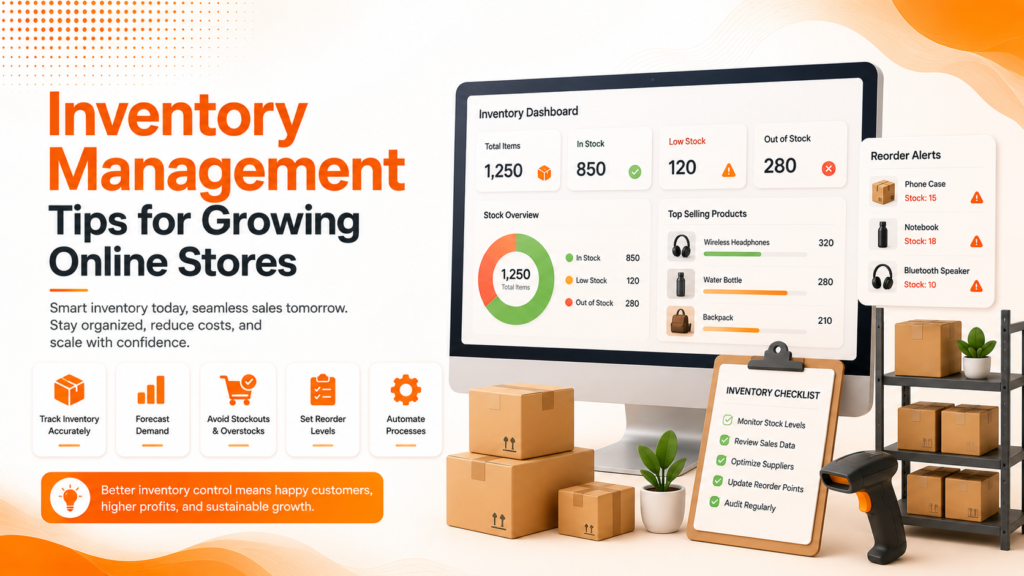
Stock management for online stores isn’t one tool or habit it’s a combination of systems that together prevent the common problems growth typically introduces.
- Real-time inventory tracking across all sales channels
- Automated low-stock alerts before items sell out completely
- Accurate demand forecasting based on historical sales data
- Clear processes for handling returns and restocking
- Regular physical inventory audits to catch discrepancies
When these systems work together, inventory stays accurate even as order volume and product complexity continue growing.
Ready for inventory systems that actually scale with your store?
Moving Beyond Spreadsheets
Inventory management software becomes genuinely necessary once a store outgrows manual spreadsheet tracking, which simply can’t keep pace with real-time updates across multiple sales channels, variants, and locations without introducing frequent human error. Dedicated software automatically syncs stock levels the moment a sale happens, preventing the overselling that manual updates inevitably allow to slip through.
This transition often feels like an unnecessary expense for smaller stores, but the cost of overselling refunding disappointed customers, damaging reviews, and losing repeat business typically exceeds software costs fairly quickly once order volume reaches a meaningful scale.
💡
Tip
Before choosing inventory software, map out every sales channel you currently use or plan to use. Choosing a tool that doesn't sync with a channel you'll need later means facing a disruptive switch down the road.
Avoiding Stockouts Through Proactive Alerts
Avoid stockouts by setting automated low-stock alerts well before inventory actually reaches zero, giving enough lead time to reorder from suppliers without leaving a popular product unavailable for purchase during the gap. This buffer needs to account for actual supplier lead times, not just an arbitrary low number that doesn’t reflect how long restocking genuinely takes.
Stockouts don’t just mean lost sales during the gap itself they often push customers toward competitors who do have the product in stock, sometimes permanently shifting that customer’s future purchasing behavior away from your store entirely.
43%
Of small businesses don't track inventory or use manual methods
34%
Of businesses have shipped an order late due to inventory errors
20–30%
Typical excess inventory carrying cost as a percentage of item value annually
Forecasting Demand Accurately
Inventory tracking data becomes genuinely valuable when used to forecast future demand, not just record current stock levels. Analyzing historical sales patterns seasonal spikes, day-of-week trends, or growth trajectory helps predict how much inventory to order and when, rather than reactively reordering only after noticing stock has already run dangerously low.
This forecasting becomes increasingly important as a store scales, since ordering too conservatively risks stockouts during demand spikes, while over-ordering ties up valuable cash in excess inventory that sits unsold, creating its own separate financial strain on the business.
Syncing Inventory Across Multiple Sales Channels
Growing stores frequently sell across multiple channels simultaneously their own website, Amazon, and possibly physical retail locations creating genuine risk of overselling if inventory isn’t synced in real-time across every channel a product is listed on. A sale on one channel needs to immediately reflect reduced availability everywhere else that same product appears.
Inventory management software built specifically to handle multi-channel synchronization removes the manual burden of updating stock counts separately across each platform, a process that becomes genuinely unmanageable manually once a store operates across more than one or two sales channels simultaneously.
Inventory problems rarely announce themselves clearly they show up as a canceled order, a bad review, or a customer who quietly never comes back.
Common Inventory Management Mistakes to Avoid
Even growing, successful stores fall into familiar traps: relying on manual spreadsheets well past the point they can reliably keep up, setting reorder points without accounting for actual supplier lead times, or neglecting regular physical inventory audits that catch quiet discrepancies before they compound.
The fix isn’t more manual effort it’s better systems. Automated, real-time inventory tracking consistently prevents the costly errors that manual processes eventually allow through as order volume grows.
How IWS Solutions Can Help
Our team helps growing eCommerce businesses implement scalable inventory management systems, from multi-channel syncing to demand forecasting, keeping stock accurate as order volume increases.