
INTERNAL LINKING
SEO
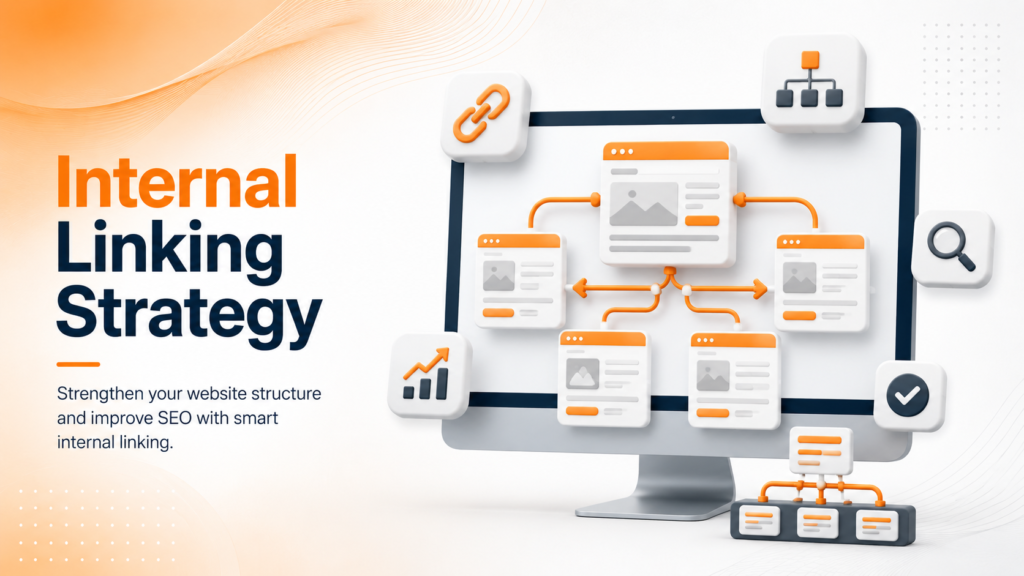
Internal Linking Strategy A Complete Guide for SEO
The often-overlooked SEO tactic that’s entirely within your control and how a smart internal linking strategy boosts rankings across your entire site.
Why Internal Linking Deserves More Attention
While backlinks from other websites get most of the SEO spotlight, internal linking strategy remains one of the few ranking factors a business has complete, immediate control over. Every link between your own pages helps search engines understand site structure, distributes ranking authority, and guides visitors toward related, valuable content.
Internal links SEO benefits compound because they require no outside cooperation unlike earning a backlink from another website, adding a well-placed internal link is entirely within a business’s own hands, achievable immediately without waiting on external outreach or relationship building.
The Building Blocks of Effective Internal Linking
Internal linking best practices aren’t one technique they’re a combination of strategic decisions that together strengthen how search engines and visitors navigate your site.
- Linking from high-authority pages to newer, developing content
- Descriptive, keyword-relevant anchor text rather than “click here”
- Logical, hierarchical site structure supporting easy navigation
- Regular audits to fix broken or outdated internal links
- Contextual placement within genuinely relevant content
When these elements are applied consistently, internal linking becomes a genuine SEO asset rather than an afterthought added inconsistently.
Ready for an internal linking strategy that strengthens your whole site?
How Internal Links Distribute Authority
Search engines use internal links to understand which pages a site considers most important, partly based on how many internal links point to them and from where. Internal link building strategically directs some of this authority from established, high-performing pages toward newer or underperforming content that could benefit from additional ranking support.
This means a strong, well-trafficked homepage or popular blog post can genuinely help boost a newer, related article simply by linking to it contextually, passing along some of its accumulated authority and signaling to search engines that the newer content deserves attention too.
💡
Tip
Identify your three highest-traffic pages and check whether they link to your newest, most important content. If not, adding a few contextual links there is often one of the fastest internal SEO wins available.
Writing Descriptive Anchor Text
Anchor text — the clickable, visible text of a link provides search engines with important context about what the linked page actually covers. Generic anchor text like “click here” or “read more” wastes this opportunity entirely, while descriptive text like “learn more about local SEO checklist strategies” clearly signals relevance to both search engines and readers deciding whether to click.
This doesn’t mean forcing exact-match keywords unnaturally into every link. Natural variation in anchor text phrasing, while still remaining descriptive and relevant, tends to read more authentically and avoids the over-optimization patterns that can occasionally raise algorithmic red flags when applied too aggressively.
40%
Higher page authority for well-internally-linked content
37%
Of SEO professionals rank internal linking as a top-5 priority
3x
Longer average session duration on sites with strong internal linking
Building Topic Clusters Through Internal Links
Site structure SEO benefits significantly from organizing related content into topic clusters a comprehensive “pillar” page covering a broad topic, linked to and from several more specific, related articles diving deeper into individual subtopics. This structure helps search engines recognize genuine topical authority across an interconnected group of pages, rather than treating each article as an isolated, unrelated piece of content.
Internal linking for blogs works particularly well with this approach, since a growing archive of related articles naturally creates opportunities to link new content back to established cornerstone pieces, reinforcing both the newer content and the pillar page’s authority simultaneously.
Auditing and Maintaining Internal Links Over Time
As sites grow and evolve, previously valid internal links can become outdated, pointing to deleted pages, changed URLs, or content that’s been significantly restructured. Regular internal link audits catch these issues, since broken internal links create a poor user experience and waste the SEO value that link would otherwise have contributed.
This audit process also reveals opportunities older, popular content that hasn’t been updated to link toward newer, relevant articles, missing an easy chance to strengthen internal linking that a simple periodic review would otherwise catch and correct.
Internal linking is the rare SEO tactic that doesn't require anyone else's permission you already control every link on your own website.
Common Internal Linking Mistakes to Avoid
Even experienced SEO practitioners fall into familiar traps: using generic anchor text repeatedly, linking excessively without genuine relevance, or setting up internal links once during launch and never revisiting them as the site grows.
The fix isn’t linking everywhere possible it’s linking strategically and contextually. A thoughtful, well-maintained internal linking strategy consistently outperforms either neglecting internal links entirely or over-optimizing them unnaturally.
How IWS Solutions Can Help
Our team builds strategic internal linking structures as part of every SEO engagement, helping distribute authority effectively and guide both search engines and visitors through your site’s most valuable content.