
DIGITAL MARKETING
EMAIL SEGMENTATION
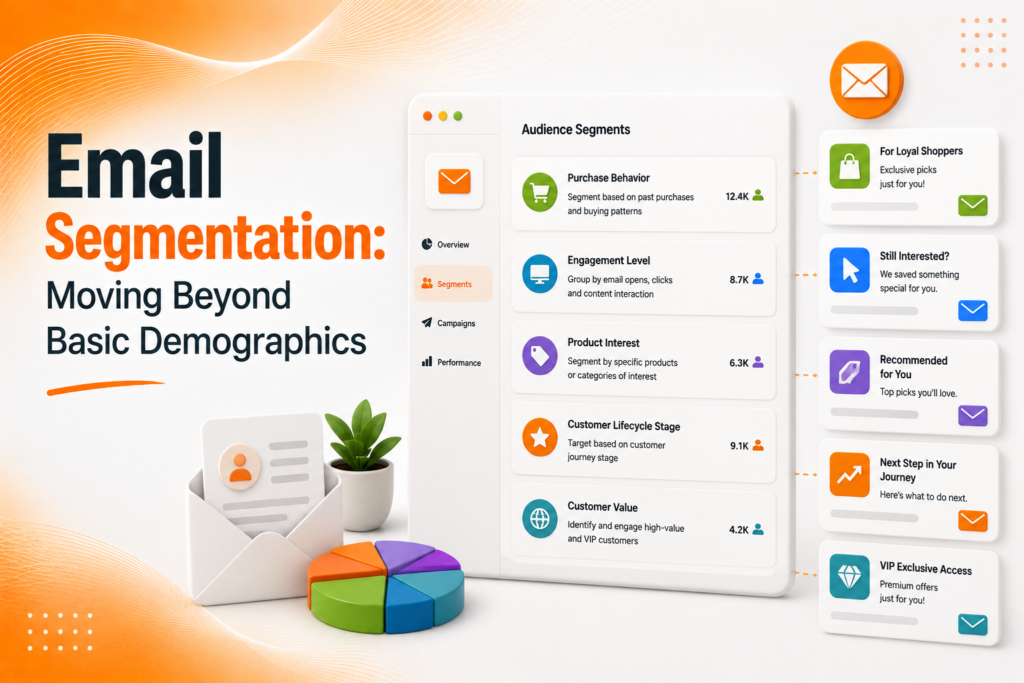
Email Segmentation Moving Beyond Basic Demographics
Age and location tell you very little about why someone actually opens or ignores your email.
Why Demographic Segmentation Falls Short
Email segmentation often starts and stops at basic demographics age, gender, location because that data is easy to collect and simple to sort by. But demographic segmentation alone genuinely fails to capture what actually drives someone to open, click, or convert, since two people of the same age and location can have completely different needs, interests, and buying stages.
Moving beyond basic demographics means segmenting by genuine behavior and intent what someone has actually done, not just who they demographically appear to be on paper.
The Building Blocks of Genuine Email Segmentation
Effective email segmentation examines several distinct signals together, not just a single demographic field pulled from a signup form.
- Purchase history and genuine buying frequency
- Engagement level opens, clicks, and recency
- Stage in the customer journey or funnel
- Browsing or content interaction behavior
- Explicit preferences customers have genuinely shared
When these signals are combined, email segmentation reveals genuine intent rather than a broad demographic guess.
Ready to segment your email list around what customers actually do?
What Behavioral Segmentation Actually Captures
Behavioral segmentation genuinely groups subscribers by what they’ve done pages visited, products viewed, past purchases, or how recently and frequently they engage with previous emails. This approach reflects genuine interest and intent far more accurately than static demographic fields collected once at signup and rarely updated afterward.
A subscriber who repeatedly opens emails about a specific product category is telling you something genuinely useful information a birthdate or zip code alone could never reveal.
💡
Tip
Look at your last five campaigns and identify which subscribers clicked but didn't purchase. That group alone is often worth a dedicated, more targeted follow-up segment.
Lifecycle and Funnel-Stage Segmentation
Genuinely effective segmentation also accounts for where a subscriber sits in the customer journey a brand-new subscriber needs different messaging than a repeat customer or someone who hasn’t engaged in months. Sending the same generic campaign to all three groups regardless of stage wastes genuine opportunities to move each one forward appropriately.
Lifecycle segmentation allows welcome sequences, re-engagement campaigns, and loyalty messaging to each speak to a subscriber’s actual current relationship with the business, rather than treating the entire list as a single undifferentiated audience.
60%
Increase in revenue from behaviorally segmented email campaigns vs single-blast sends
39%
Higher open rates for segmented campaigns compared to non-segmented sends
3x
More clicks generated by lifecycle-stage segmented emails
Why Dynamic Segments Matter More Than Static Lists
Many businesses build segments once and rarely revisit them, but genuine behavioral data changes constantly a customer’s engagement level, purchase recency, and interests shift over time. Dynamic segments that update automatically based on real-time behavior keep messaging genuinely relevant, rather than relying on a static snapshot that grows less accurate the longer it goes unrefreshed.
This shift from static to dynamic segmentation represents one of the more genuinely impactful changes a business can make to existing email infrastructure without needing an entirely new platform.
Turning Segmentation Into Genuine Results
Email segmentation only delivers real value when it directly shapes content, offers, and timing for each group, rather than existing as an unused list of tags in the backend. Each segment should receive messaging genuinely tailored to its specific behavior or stage, not a slightly modified version of the same universal campaign.
This also benefits from ongoing refinement rather than a one-time setup, since genuinely useful segments evolve as more behavioral data accumulates over time.
Demographics tell you who someone is on paper behavior tells you what they actually care about right now.
Common Mistakes to Avoid
Even experienced marketers fall into familiar traps: segmenting only by demographics collected at signup, building segments once and never updating them, or creating so many narrow segments that campaigns become genuinely unmanageable.
The fix isn’t more segments it’s segments built around genuine behavior that directly inform what each group actually receives.
How IWS Solutions Can Help
Our team builds behavioral and lifecycle-based email segmentation strategies, helping businesses move beyond basic demographics toward messaging that genuinely reflects customer intent.