
B2B vs B2C
WEB DEVELOPMENT
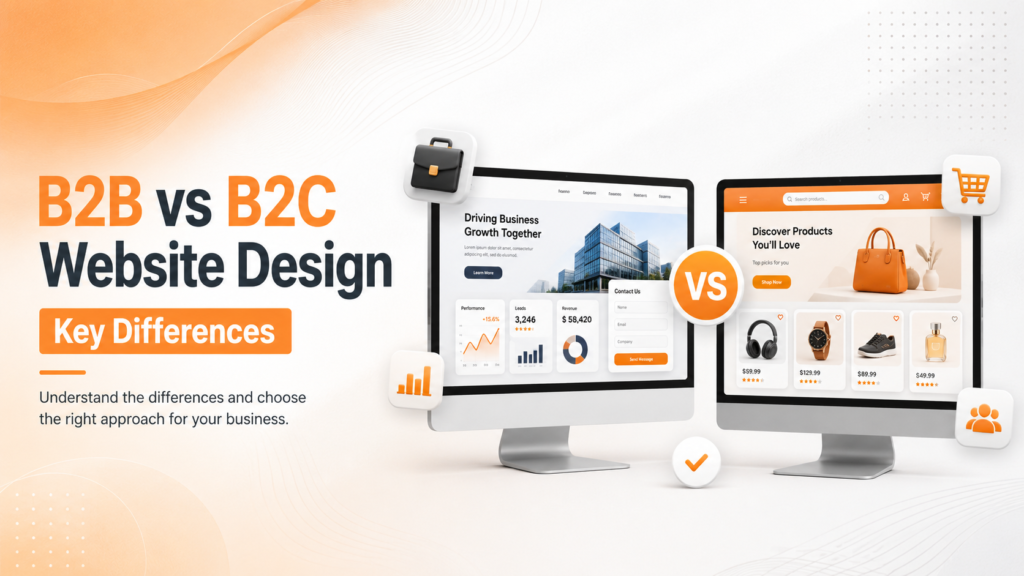
B2B vs B2C Website Design Key Differences
The same design fundamentals, applied very differently here’s how audience and buying behavior should shape your website’s structure and content.
Why B2B and B2C Websites Require Different Approaches
B2B vs B2C website design differ fundamentally because the people visiting each type of site are making completely different kinds of decisions. A B2C shopper often buys on impulse or emotion within minutes, while a B2B buyer typically represents an organization, involves multiple stakeholders, and moves through a considerably longer, more deliberate evaluation process.
Business website design differences show up everywhere content depth, navigation structure, and even the primary calls-to-action need to reflect these fundamentally different buying journeys, rather than applying the same design playbook regardless of audience type.
The Building Blocks of Each Approach
B2B web development and B2C web development share core design principles but diverge significantly in priority and execution.
- B2B prioritizes detailed information and credibility signals
- B2C prioritizes emotional appeal and fast, frictionless purchasing
- B2B typically has longer content and multiple decision-maker paths
- B2C typically has shorter paths from discovery to purchase
- B2B CTAs focus on consultations; B2C CTAs focus on immediate purchase
Understanding these differences shapes nearly every structural decision across the site.
Ready for a website designed around how your customers actually buy?
Content Depth: Detailed vs. Concise
B2B website design typically requires significantly more detailed content than B2C, since business buyers need substantial information case studies, technical specifications, ROI data — to justify a purchase decision that often requires approval from multiple stakeholders within their organization before moving forward.
B2C website design, by contrast, generally favors more concise, emotionally compelling content. A consumer buying a product for personal use rarely needs extensive technical documentation; they need clear benefits, appealing visuals, and enough trust signals to feel confident completing a purchase within a single, relatively quick visit.
💡
Tip
If you're unsure how much content depth your site needs, consider how many people are typically involved in approving a purchase. More stakeholders generally means more detailed content is needed to support internal buy-in.
Buyer Journey Length and Site Navigation
B2B buying decisions frequently span weeks or months, involving research, comparison, and internal approval processes across multiple stakeholders. This longer journey means B2B web development needs to support return visits effectively clear resource sections, downloadable content, and multiple entry points for different roles within a buying committee, from technical evaluators to budget decision-makers.
B2C purchases typically happen within a single session, sometimes within minutes. This compressed timeline means B2C web development prioritizes removing every possible friction point immediately simple navigation, fast-loading pages, and a checkout process requiring minimal steps from product discovery to completed purchase.
67%
Of B2B buying journeys happen digitally before contacting sales
3–7
Average number of stakeholders involved in a B2B purchase decision
88%
Of B2C purchase decisions are influenced by emotional factors
Trust Signals: Different Types, Different Placement
Both B2B and B2C websites rely on trust signals, but the specific types differ meaningfully. B2B website design often features client logos, detailed case studies, industry certifications, and specific measurable outcomes since business buyers are evaluating risk and ROI on behalf of their organization, not just personal satisfaction.
B2C sites tend to favor customer reviews, star ratings, and user-generated content displayed prominently near products, since these social proof signals more directly address the personal, emotional confidence a consumer needs before completing an individual purchase decision.
Calls-to-Action That Match the Buying Process
B2B calls-to-action typically focus on generating a qualified lead rather than an immediate transaction “Request a Demo,” “Talk to Sales,” or “Download the Guide” all acknowledge that a direct purchase isn’t realistic within a single website visit for most business buying decisions.
B2C calls-to-action, by contrast, usually push directly toward immediate purchase “Add to Cart,” “Buy Now,” or “Shop the Collection” reflecting the shorter, more direct path typical of consumer buying decisions that don’t require extensive internal approval processes before completing.
A B2B website sells to a committee over weeks. A B2C website sells to one person in minutes. Design that ignores this difference is designing for the wrong buyer entirely.
Common B2B vs B2C Design Mistakes to Avoid
Even experienced teams fall into familiar traps: applying B2C-style urgency tactics to a considered B2B purchase decision, or overwhelming B2C shoppers with B2B-style technical depth that isn’t relevant to a quick, emotional purchase decision.
The fix isn’t choosing a generic middle ground it’s genuinely understanding your specific audience’s buying process and designing deliberately around it, rather than applying a one-size-fits-all template regardless of buyer type.
How IWS Solutions Can Help
Our team designs websites tailored to how your specific customers actually buy, whether that’s a detailed B2B site supporting a longer sales cycle or a fast, frictionless B2C store built for quick purchase decisions.