
CUSTOMER EXPERIENCE
ECOMMERCE
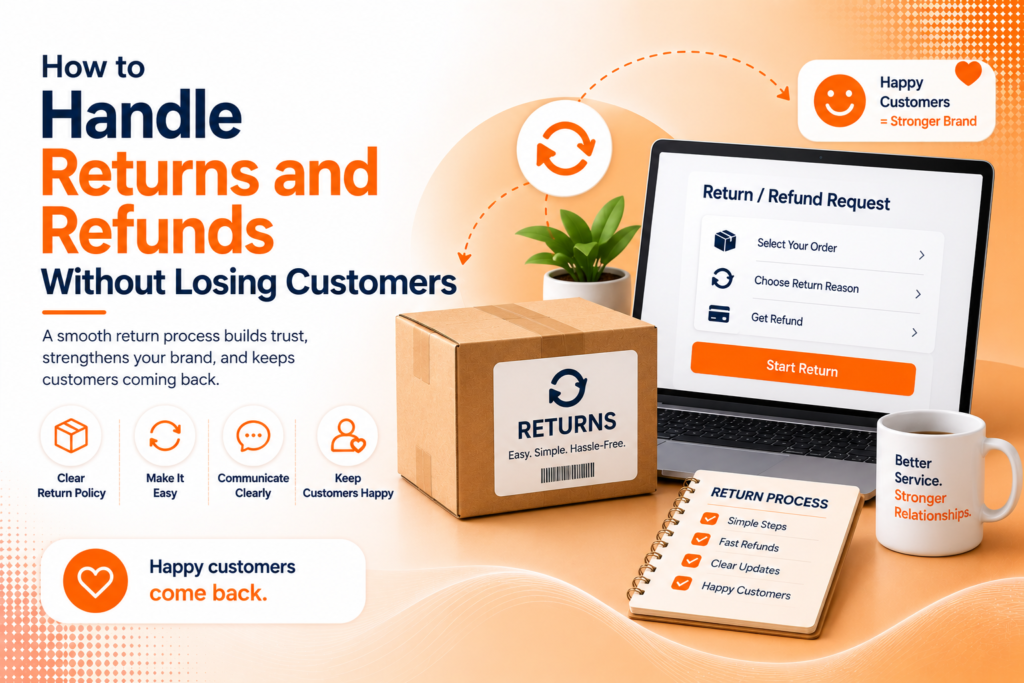
How to Handle Returns and Refunds Without Losing Customers
A well-managed return isn’t a lost sale it’s often the moment that determines whether a customer ever buys from you again.
Why Return Handling Directly Affects Customer Loyalty
Returns and refunds feel like a purely operational headache, but how a business handles this moment often matters more to long-term customer relationships than the original purchase experience itself. A customer whose return goes smoothly frequently becomes more loyal, not less proof that a business stands behind what it sells.
Ecommerce returns policy quality has become a genuine competitive factor, not just an internal process detail. Shoppers increasingly check return policies before purchasing, particularly for higher-priced items, meaning a confusing or restrictive policy can actively cost sales before a return even happens.
The Building Blocks of a Return Process That Retains Customers
Return policy best practices aren’t just about the written rules they’re about the entire experience a customer has when something doesn’t work out.
- A clearly written, easy-to-find return policy
- A simple, self-service return initiation process
- Fast, transparent communication throughout the refund
- Reasonable timeframes that don’t feel restrictive
- A genuine opportunity to recover the relationship, not just the transaction
When these elements work together, even a return can strengthen customer trust rather than damage it.
Ready for a return process that keeps customers coming back?
Writing a Return Policy That Builds Trust, Not Confusion
An effective return policy needs to be genuinely easy to find and understand buried, vague, or overly complicated policies create anxiety before a purchase even happens, since customers can’t confidently predict what happens if something goes wrong. Clear timeframes, condition requirements, and refund method should all be stated plainly, without legal-sounding language that obscures the actual terms.
Hassle-free returns don’t necessarily mean unlimited or overly generous terms they mean terms that are clearly communicated and consistently honored. A reasonably strict but transparent policy often builds more trust than a generous-sounding one riddled with confusing exceptions discovered only after a customer tries to actually use it.
💡
Tip
Have someone unfamiliar with your business read your return policy and summarize it back to you. If they get any part wrong, that section likely needs simpler, clearer language.
Making the Return Process Genuinely Self-Service
Customer returns processed through a simple, self-service portal where customers can initiate a return, print a label, and track status without emailing support significantly reduce friction compared to processes requiring back-and-forth communication just to start the return itself.
This self-service approach benefits the business operationally too, reducing support ticket volume for routine returns while giving customers the immediate, transparent control that reduces anxiety during what’s already a slightly frustrating moment in their experience with the brand.
92%
Of customers will buy again if returns are easy
67%
Of shoppers check the return policy before completing a purchase
58%
Prefer businesses offering free return shipping
Communicating Clearly Throughout the Refund Process
Refund process transparency significantly affects customer perception, even when the underlying timeline can’t be sped up. Automated status updates confirming receipt of the returned item, confirming refund processing, and confirming completion keep customers informed without requiring them to proactively ask what’s happening with their return.
Silence during a return creates anxiety and erodes trust, even if the return is actually being processed normally in the background. Customers who feel informed throughout the process report significantly higher satisfaction than those left wondering whether their return was received or is being handled at all.
Turning Returns Into Retention Opportunities
Return management doesn’t have to end with simply processing a refund. A brief follow-up asking why the product didn’t work out provides valuable feedback while showing genuine care beyond the transaction itself. In some cases, offering a discount on a future purchase or suggesting a better-fitting alternative product can convert what seemed like a lost sale into a longer-term customer relationship.
This approach requires viewing returns as a customer service opportunity rather than purely an operational cost to minimize, recognizing that how a business responds when something goes wrong often reveals more about its actual values than how it behaves when everything goes smoothly.
Customers don't remember that something went wrong with their order they remember exactly how the business responded when it did.
Common Return Handling Mistakes to Avoid
Even well-intentioned businesses fall into familiar traps: burying return policy details in confusing legal language, requiring customers to email support just to initiate a simple return, or going silent during the refund process without proactive status updates.
The fix isn’t a more lenient policy it’s a clearer, more transparent process. A well-communicated, self-service return experience consistently retains more customers than a generous policy that’s confusing to actually use.
How IWS Solutions Can Help
Our team helps eCommerce businesses design clear return policies and smooth, self-service return processes that protect customer relationships, even when a purchase doesn’t work out.