
SALES STRATEGY
ECOMMERCE
Cross-Selling and Upselling Strategies for eCommerce
Proven techniques to increase average order value without feeling pushy turning single purchases into larger, more valuable ones.
Why Cross-Selling and Upselling Matter More Than New Traffic
Acquiring a new customer typically costs significantly more than encouraging an existing one to spend a little more per order. Cross-selling strategies and upselling techniques directly increase average order value, meaning every marketing dollar spent driving traffic to the store generates more revenue from the same visitor.
This makes these strategies some of the highest-ROI improvements a store can implement, since they don’t require additional ad spend or traffic they simply capture more value from customers who were already planning to buy something in the first place.
The Building Blocks of Effective Cross-Sell and Upsell
Increase average order value strategies work best when they feel genuinely helpful to the customer, not like an aggressive sales tactic disconnected from what they actually want.
- Relevant product recommendations based on what’s in the cart
- Clear value framing for any upgrade or upsell offer
- Strategic placement at the right moment in the buying journey
- Bundling complementary products at a slight discount
- Post-purchase upsell opportunities that don’t disrupt checkout
When these elements are genuinely relevant, customers often welcome the suggestion rather than feeling upsold.
Ready to increase order value without feeling pushy?
Understanding the Difference Between Cross-Selling and Upselling
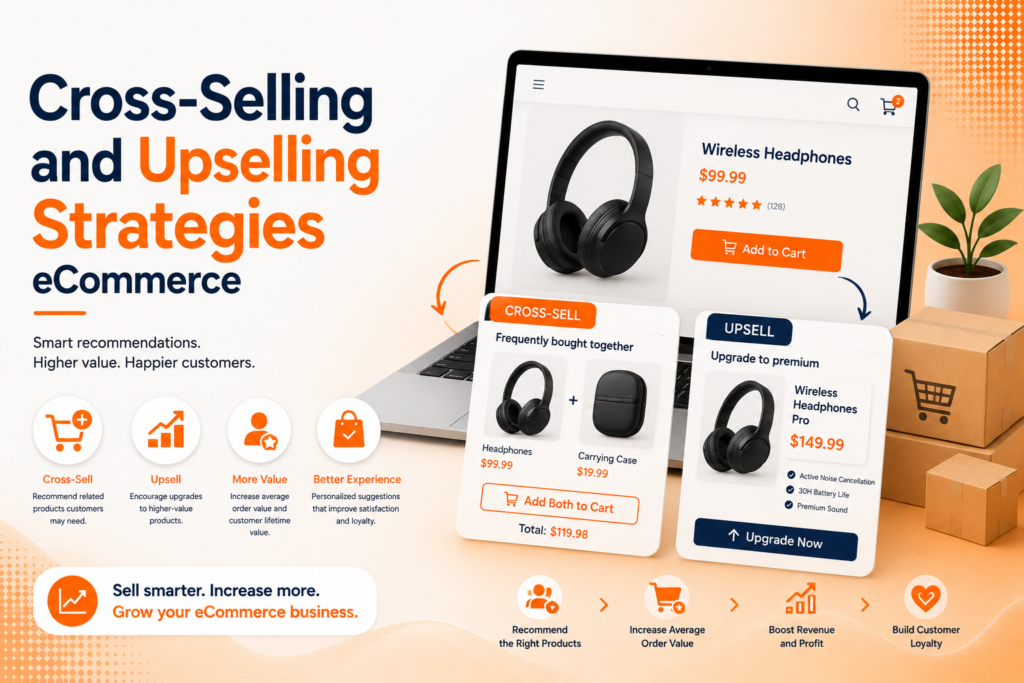
Cross-selling suggests complementary products alongside the item already in a customer’s cart recommending a phone case when someone buys a new phone, for example. Upselling techniques, by contrast, encourage a customer to choose a higher-value version of the same product they’re already considering, like suggesting a larger size or premium model.
Both strategies rely on genuine relevance to work well. Product recommendations that feel random or disconnected from the customer’s actual purchase intent tend to be ignored, or worse, feel like an obvious sales tactic that erodes trust rather than adding genuine value to the shopping experience.
💡
Tip
Test showing only 2-3 cross-sell recommendations instead of a long list. Too many options can create decision paralysis, actually reducing the chance a customer adds anything extra at all.
Where to Place Cross-Sell Recommendations
Timing significantly affects whether cross-selling strategies actually convert. Product pages showing “frequently bought together” items work well since customers are already in a browsing, decision-making mindset. Cart pages showing complementary add-ons capture customers right before checkout, when they’re already committed to purchasing.
Post-purchase cross-sell offers, shown immediately after checkout completion, capture additional sales without any risk of disrupting the original purchase, since the primary transaction is already secured before the additional offer is even presented.
35%
Of Amazon's revenue comes from cross-sell and upsell recommendations
20%
Average increase in order value from effective upselling
10–30%
Typical revenue lift from implementing strategic product bundling
Making Upsells Feel Like Genuine Value
Effective ecommerce upsell offers frame the higher-tier option around genuine customer benefit, not just a higher price point. Highlighting what the customer actually gains better durability, more capacity, additional features makes the upgrade feel like a smart decision rather than simply spending more money for its own sake.
Tiered pricing structures work particularly well here, presenting a clear “good, better, best” comparison that makes the mid or premium tier feel like the obviously smart choice relative to the basic option, especially when the price difference between tiers is proportionally small compared to the added value.
Bundling as a Cross-Sell Strategy
Product bundling packaging complementary items together at a slight discount compared to purchasing separately gives customers a clear incentive to buy more while simplifying their decision-making process. Rather than evaluating multiple separate purchase decisions, a well-designed bundle presents one clear, value-forward choice.
This approach works particularly well for products naturally used together, where the bundle genuinely simplifies a purchase decision the customer would likely have made piece by piece anyway, making the bundled discount feel like a reward for convenience rather than an unnecessary discount given away.
The best cross-sell doesn't feel like a sales tactic it feels like the store genuinely understood what you needed next.
Common Cross-Selling and Upselling Mistakes to Avoid
Even experienced store owners fall into familiar traps: recommending irrelevant products that don’t match customer intent, overwhelming shoppers with too many simultaneous offers, or pushing upsells so aggressively that it damages trust in the primary purchase decision.
The fix isn’t more offers it’s more relevance. A single, genuinely useful recommendation will outperform five generic, disconnected suggestions almost every time.
How IWS Solutions Can Help
Our team helps eCommerce businesses implement genuinely relevant cross-selling strategies and upselling techniques, increasing average order value while keeping the shopping experience feeling helpful, not pushy.