
SHIPPING
ECOMMERCE
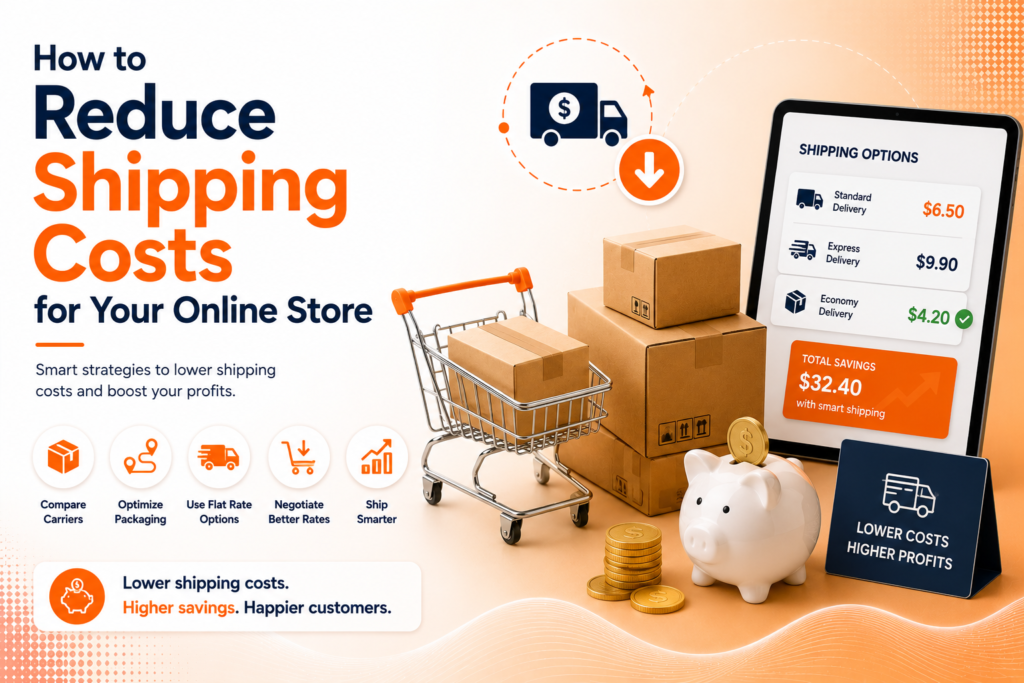
How to Reduce Shipping Costs for Your Online Store
Practical strategies to lower your shipping expenses without cutting into the customer experience that keeps people coming back.
Why Shipping Costs Quietly Erode Profit Margins
For most eCommerce businesses, shipping is one of the largest recurring costs eating into margins, yet it often gets far less strategic attention than marketing or product sourcing. Reduce shipping costs efforts frequently get delayed simply because shipping feels like a fixed, unavoidable expense rather than something that can be actively optimized.
Ecommerce shipping costs compound quickly at scale. A seemingly small $1-2 savings per package, multiplied across hundreds or thousands of monthly orders, represents a meaningful improvement to overall profitability often more impactful than an equivalent increase in sales volume alone.
wasted space
lower DIM weight
The Building Blocks of Lower Shipping Costs
Shipping cost optimization isn’t one single fix it’s a combination of strategic decisions that together reduce expenses without sacrificing delivery speed or customer experience.
- Negotiated carrier rates based on shipping volume
- Right-sized packaging to avoid paying for wasted space
- Strategic use of regional carriers for specific zones
- Clear shipping policy that sets accurate customer expectations
- Technology that automatically selects the cheapest viable option
When these elements work together, shipping costs drop meaningfully without customers noticing any decline in service quality.
Ready to reduce shipping costs without hurting customer experience?
Negotiate Rates as Your Volume Grows
Cheap shipping for small business often starts with simply asking. Major carriers regularly offer negotiated rates below their published prices once a business ships consistent monthly volume, yet many smaller stores never actually request better terms, assuming standard rates are fixed and non-negotiable.
Even businesses with modest volume can often access improved rates through third-party shipping platforms that aggregate volume across many merchants, passing along discounted rates that individual small stores couldn’t negotiate directly with carriers on their own.
💡
Tip
Before your next carrier contract renewal, request a rate review even if you haven't dramatically increased volume. Carriers frequently offer better terms simply to retain existing customers who ask.
Right-Size Your Packaging
Dimensional weight pricing means carriers charge based on package size, not just actual weight a small, light item shipped in an oversized box can cost significantly more than necessary simply due to wasted space. Shipping strategies for online stores should include auditing packaging sizes regularly to eliminate this often-overlooked cost.
Investing in a range of appropriately sized boxes or mailers, rather than defaulting to one standard box for every product, typically pays for itself quickly through reduced dimensional weight charges, particularly for stores shipping smaller or irregularly shaped items.
63%
Of online shoppers abandon cart due to unexpected shipping costs
30%
Average savings from negotiated carrier rates vs standard published pricing
15%
Cost reduction from right-sized packaging alone
Consider Regional and Alternative Carriers
Major national carriers aren’t always the cheapest option for every shipment. Regional carriers often offer meaningfully lower rates for deliveries within their specific service area, making them worth incorporating into a shipping strategy for orders going to nearby zones rather than defaulting to one carrier for every single shipment nationwide.
Rate shopping tools that automatically compare pricing across multiple carriers for each individual shipment remove the manual effort of this comparison, automatically selecting whichever option is genuinely cheapest for that specific package’s weight, dimensions, and destination.
Strategic Free Shipping Thresholds
Free shipping strategy doesn’t mean absorbing shipping costs on every single order. Setting a minimum order threshold for free shipping calculated to cover the shipping cost through the increased average order value encourages customers to add items to reach that threshold, often increasing overall order value enough to offset the shipping expense entirely.
This approach requires calculating the threshold carefully based on actual margins and average shipping costs, rather than picking an arbitrary number, ensuring the free shipping incentive genuinely improves profitability rather than simply shifting cost from the customer to the business unsustainably.
Shipping costs don't have to be a fixed expense you accept they're a variable you can actively optimize, order by order.
Common Shipping Cost Mistakes to Avoid
Even established stores fall into familiar traps: using one-size-fits-all packaging regardless of product dimensions, never renegotiating carrier rates as volume grows, or offering free shipping without calculating whether the threshold actually protects margins.
The fix isn’t absorbing higher costs it’s actively managing them. Regular review of packaging, rates, and shipping policy consistently uncovers savings that compound significantly over time.
How IWS Solutions Can Help
Our team helps eCommerce businesses optimize their online store operations, from checkout experience to strategic shipping presentation, helping protect margins while keeping customers happy.