
DIGITAL MARKETING
RETARGETING
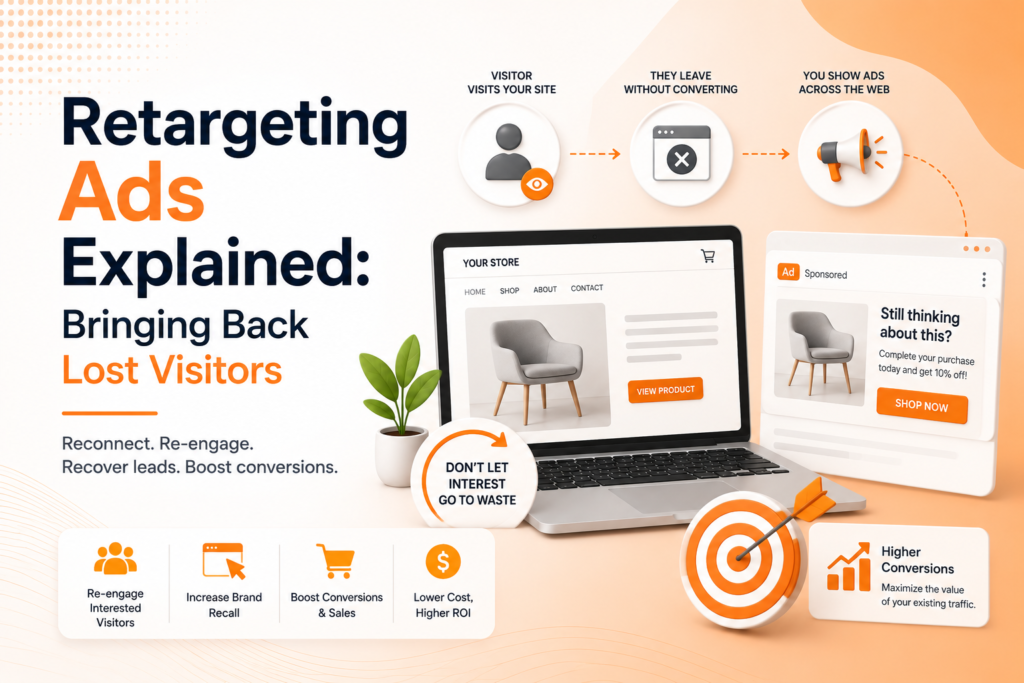
Retargeting Ads Explained: Bringing Back Lost Visitors
Most visitors don’t convert on their first visit here’s how retargeting ads bring them back and turn missed opportunities into customers.
Why Most First-Time Visitors Never Convert
The vast majority of website visitors leave without converting, regardless of how well-designed a site or offer is. People browse, compare, get distracted, or simply aren’t ready to decide yet. Without a way to reach these visitors again, that traffic — often the result of real marketing spend disappears entirely.
Retargeting ads solve exactly this problem, showing ads specifically to people who already visited your site as they browse elsewhere online. Unlike cold advertising to strangers, retargeting reaches an audience that’s already demonstrated genuine interest, making it one of the most efficient forms of digital advertising available.
Product
to Cart
Checkout
The Building Blocks of an Effective Retargeting Campaign
A retargeting campaign isn’t one generic ad shown to everyone who visited it’s a combination of segmented audiences and tailored messaging that together bring back the right visitor with the right message.
- Clear audience segments based on specific site behavior
- Frequency capping to avoid overwhelming visitors
- Creative tailored to what each segment actually viewed
- A defined time window matching your typical sales cycle
- Clear conversion tracking to measure real performance
When these elements are combined thoughtfully, retargeting consistently delivers stronger returns than cold, first-touch advertising alone.
Ready to bring back the visitors who almost converted?
How Website Retargeting Actually Works
Website retargeting relies on a small tracking pixel placed on your site, which adds visitors to a custom audience list the moment they browse specific pages. When those same visitors later browse other websites or social platforms, the ad network recognizes them and serves your ad keeping your brand visible without requiring them to actively search for you again.
This technical simplicity is part of why retargeting scales so effectively. Once the pixel is properly installed, audience building happens automatically in the background, continuously growing your pool of warm, already-interested prospects without additional manual effort.
💡
Tip
Set a frequency cap limiting how often the same person sees your retargeting ad. Too many repeated impressions feels intrusive and can actively damage brand perception rather than encourage conversion.
Dynamic Retargeting: Personalization at Scale
Dynamic retargeting takes the strategy further by showing visitors ads featuring the exact products or pages they viewed, rather than a single generic ad shown to everyone. Someone who browsed a specific product sees that exact item in their retargeting ad, dramatically increasing relevance compared to a broad, one-size-fits-all message.
This personalization consistently outperforms static retargeting creative, since it directly reminds visitors of the specific item or offer that caught their attention originally, rather than requiring them to recall it themselves from a generic brand reminder.
70%
Higher conversion likelihood for retargeted visitors vs new visitors
76%
Higher click-through rate for retargeting vs standard display ads
26%
Of abandoned carts recovered through effective retargeting campaigns
Segmenting Your Retargeting Audiences
Not every visitor should see the same retargeting ad. A retargeting strategy that segments audiences by specific behavior cart abandoners, blog readers, pricing page visitors allows for genuinely tailored messaging that speaks directly to where each group actually is in their decision process.
A cart abandoner likely needs a direct reminder, possibly with an incentive to complete the purchase. A blog reader who never visited a product page probably needs more nurturing content first, rather than an immediate hard sell that doesn’t match their current stage of interest.
Setting the Right Time Window
Ad retargeting campaigns should align their duration with your typical sales cycle. A low-cost, impulse-purchase product might only need a retargeting window of a few days, while a considered, higher-priced service purchase often benefits from a longer window sometimes 30 to 90 days matching how long prospects genuinely take to decide.
Running retargeting too long after the initial visit wastes budget on prospects who’ve likely moved on entirely, while cutting the window too short abandons genuinely interested prospects before they were ready to convert.
Most visitors aren't lost forever they're just not ready yet. Retargeting is how you stay visible until they are
Common Retargeting Mistakes to Avoid
Even experienced advertisers fall into familiar traps: showing the same generic ad to everyone regardless of behavior, running campaigns without frequency caps, or setting retargeting windows that don’t match how long customers actually take to decide.
The fix isn’t more ad spend it’s smarter segmentation. A well-targeted, appropriately timed retargeting campaign consistently outperforms a broad, generic one running on a larger budget.
How IWS Solutions Can Help
Our team builds segmented, dynamic retargeting campaigns designed to bring back genuinely interested visitors with the right message at the right time, turning missed first visits into real conversions.