
NATIVE ADVERTISING
DIGITAL MARKETING
Native Advertising: What It Is and When to Use It
Ads that don’t look like ads how blending in with content, rather than interrupting it, can genuinely improve engagement.
Why Native Advertising Feels Different to Audiences
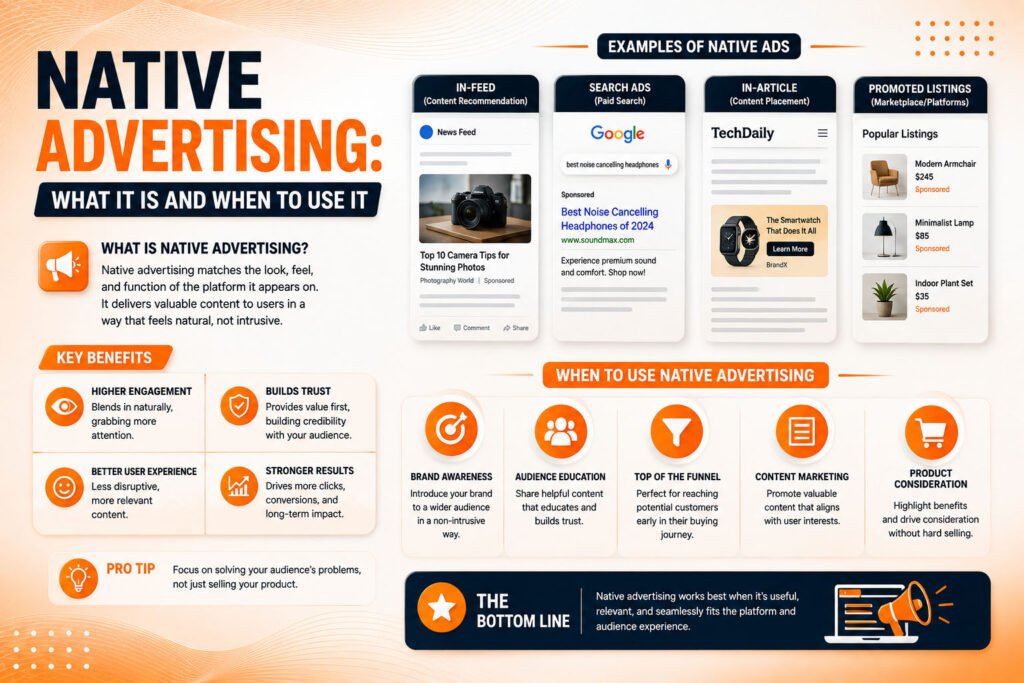
What is native advertising? It’s paid content designed to match the look, feel, and function of the platform it appears on, blending naturally with organic content rather than standing out as an obvious, separate advertisement interrupting the user’s experience. A native ad on a news site resembles an article; on social media, it resembles a regular post.
Native ads succeed because audiences have grown genuinely fatigued with traditional, obviously promotional advertising formats, often unconsciously tuning them out entirely a phenomenon sometimes called “banner blindness.” Content that doesn’t immediately register as an advertisement bypasses this learned tendency to ignore obvious promotional content.
The Building Blocks of Effective Native Advertising
Native advertising strategy requires genuinely balancing seamless content integration with honest, clear disclosure of sponsored status.
- Content genuinely matching platform format and tone
- Clear, honest sponsored content labeling
- Value delivery beyond pure promotional messaging
- Platform-appropriate targeting and placement
- Performance measurement distinct from traditional display ads
When these elements work together, native advertising achieves genuine engagement while maintaining the transparency audiences deserve and increasingly expect.
Ready for advertising that genuinely blends in and gets noticed?
Native Advertising vs Display Ads: The Genuine Difference
Native advertising vs display ads comes down to fundamental format philosophy. Traditional display ads banners, pop-ups, sidebar placements clearly announce themselves as advertisements, visually distinct from surrounding content in ways audiences have learned to recognize and often ignore entirely without conscious engagement.
Native advertising instead adopts the visual and structural format of whatever platform it appears within — a sponsored article resembling genuine editorial content, a promoted social post matching the visual style of organic posts from friends and followed accounts. This format matching genuinely increases the likelihood audiences will actually engage with the content rather than scrolling past it unconsciously.
💡
Tip
Before launching native advertising, view your sponsored content alongside genuine organic content on the same platform. If it looks jarringly different or obviously promotional despite the native format, revise it before launching.
Common Native Advertising Examples and Formats
Native advertising examples span several common formats across different platforms. Sponsored articles on news or content sites read like genuine editorial pieces, typically clearly labeled as sponsored but formatted identically to surrounding organic content. Promoted social media posts blend directly into a user’s feed, matching the visual format of organic posts from accounts they actually follow.
In-feed recommendation widgets, common on many content sites, present sponsored content alongside genuine recommended articles, using identical thumbnail and headline formatting throughout. Each format shares the same underlying principle: presenting paid content within the visual and structural conventions users already expect and comfortably engage with on that specific platform.
53%
More views for native ads compared to traditional display ads
32%
Higher purchase intent influence from native advertising vs banner ads
$400 Billion
Projected global native advertising spend by 2025
Balancing Seamless Integration With Honest Disclosure
Sponsored content success depends on genuinely balancing two seemingly competing priorities: blending naturally enough to avoid triggering audience ad-avoidance instincts, while maintaining clear, honest labeling that respects audience trust and, increasingly, regulatory requirements around advertising transparency.
This balance matters ethically and practically. Native advertising that feels deceptive once audiences realize its sponsored nature can damage trust more significantly than a traditional, obviously-labeled advertisement ever would, since the initial confusion between genuine and paid content creates a sense of having been misled, even if disclosure was technically present but insufficiently prominent.
When Native Advertising Genuinely Makes Sense
Native advertising strategy works particularly well for content-driven businesses genuinely capable of creating valuable, editorial-quality sponsored content rather than purely promotional messaging dressed in native formatting. The approach requires more creative and content investment than simply designing a traditional banner ad, since genuine native advertising success depends on content that provides authentic value even beyond its underlying promotional purpose.
Businesses without the resources or genuine content capability to create this kind of editorial-quality sponsored content may find traditional display advertising, while less engaging on average, considerably more practical and cost-effective than attempting native advertising without the genuine content quality that format specifically requires to succeed.
Native advertising doesn't work because it tricks people into clicking it works because it respects their attention enough to look like something genuinely worth their time.
Common Native Advertising Mistakes to Avoid
Even experienced marketers fall into familiar traps: creating purely promotional content disguised in native formatting without genuine value, using insufficient or unclear sponsored content disclosure, or applying identical native ad creative across platforms with genuinely different content conventions and audience expectations.
The fix isn’t disguising advertising as something it’s not it’s creating genuinely valuable content that happens to be sponsored, clearly labeled, and formatted to match the platform’s authentic conventions.
How IWS Solutions Can Help
Our team develops native advertising strategies and content that genuinely blend with platform conventions while maintaining honest disclosure, driving engagement without sacrificing audience trust.